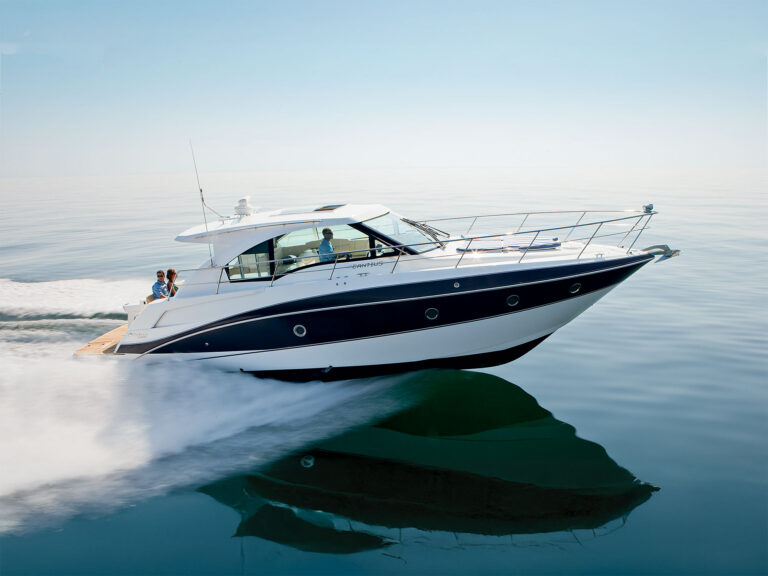
I have been conducting such inspections since my boatyard days (checking out trade-ins, especially) 25 years ago and have continued to do so testing boats for Boating. However, I was prompted to write this Quick Study after attending Steve D’Antonio’s seminar (stevedmarineconsulting.com) at last fall’s IBEX trade show. Among many titles, D’Antonio is an American Boat & Yacht Council (ABYC) Master Technician, holding certifications in corrosion, diesel, electrical and systems. This article is not intended to be encyclopedic. It simply serves as a reminder of the importance of engine-room inspections and includes a list of key points to start you off on this key task.
Safety
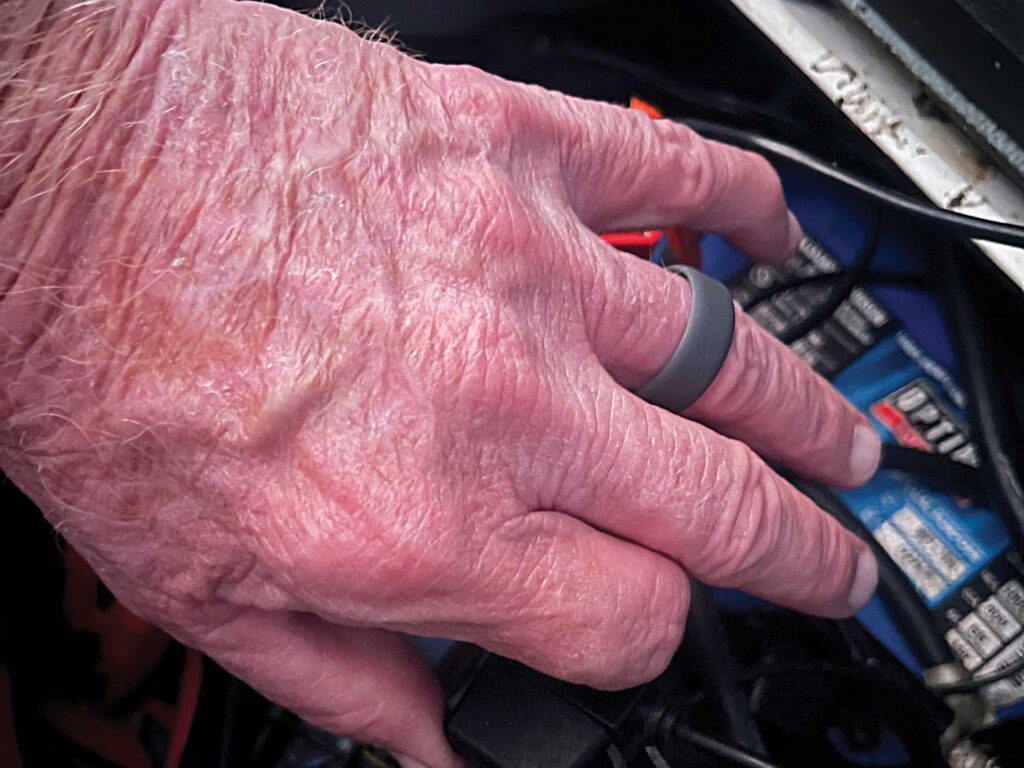
D’Antonio rightly began his presentation with a discussion of safety. Engine and mechanical spaces can be dangerous places. From cuts delivered by unsheathed hose-clamp tails and improperly trimmed zip-ties to the dangers presented by fumes, fuel and electrical systems, care and respect must attend on this job. Wear PPE, including eye protection and gloves. Also, remove jewelry and watches, which can snag in equipment, cause a spark or explosion or weld your wrist to a battery terminal. Turn off battery chargers and gensets beforehand. Remove ignition keys.

Chafe
Runs of plumbing and electrical wire routed through a boat pass through bulkheads and partitions. In all cases where it might abrade, chafe-protection must be applied. “Wire loom buys some time but it is not a permanent solution,” D’Antonio says. That means that the cutout or pass-through is generously padded and the wire or plumbing is secured such that it can’t move or vibrate as it passes through.
Seacocks
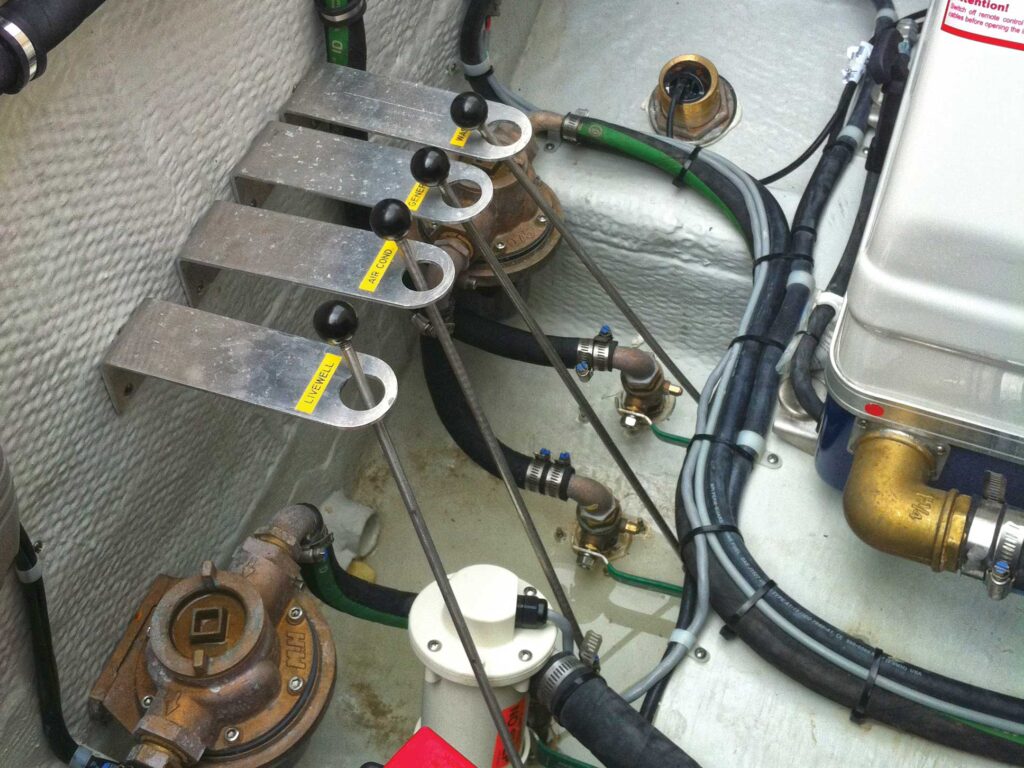
Seacocks should be accessible. (You may need to stop a leak in a rolling sea.) Make sure the handle is not obstructed by a hose, other equipment or a stringer—we see this on occasion—so that the valve can be closed. Often, a builder will install extension rods to make operating a hard-to-reach seacock-valve lever easier, as the main photo shows.
DC Electric
In testing boats, we too often find batteries with exposed positive terminals. This can cause personal injury, spark or an explosion of the battery itself. Per ABYC standards, the positive battery terminal should be covered to prevent a dropped tool, or a misplaced hand wearing jewelry from causing a spark.
Read Next: Inspecting Your Boat After Use
Belts
Look for belt dust: fine black speckling. This often indicates that the pulleys are misaligned. Also, look for cracks, frayed edges, glazing, or stretching. Lacking a manual, a rule of thumb for checking belt tension involves depressing your hand on a belt midway between pulleys. If the belt deflects more than ½ inch, it’s likely due for replacement. Make sure the engine is cool and the battery is off or disconnected before inspecting belts.
Motor Mounts
Motor mounts should be parallel to the centerline of the engine. Also, look for excessive corrosion; the mounts need to remain adjustable as the boat ages. The rubber, or damping material should not be crumbling. Look at the mounting holes: Are any ovoid due to movement? Pros often perform a backdown test, in which the mounts are observed while the engine is placed in reverse and accelerated. Even new mounts can be improperly sized or installed.
Fire Suppression
Make sure the fire-suppression system is active. D’Antonio says he encounters many in which the system is disabled because the “shipping pin” has not been removed from the manual cable! Another good tip to check: Can the ER smoke alarm be heard at the helm? If not, network it, so that it can be.