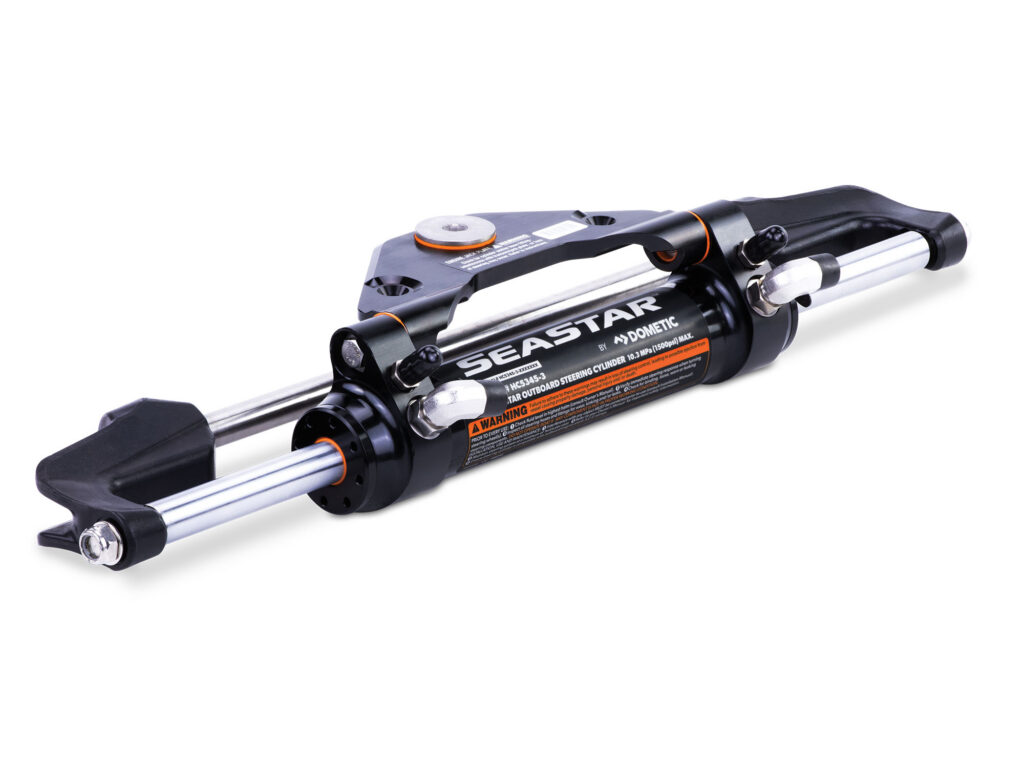
Hydraulic steering systems are so super reliable that boaters may forget about them. But if you were to lose steering, you’d be put in a dangerous—perhaps life-threatening—situation. For this reason, hydraulic steering systems require regular maintenance and inspection. Use these tips—along with the steering-system manual—to help maintain your boat’s hydraulic steering. If at any point you feel in over your head, trust that instinct and call a professional.
Check Fluid Level
Note: sidemount and splashwell-mount cylinders must be fully retracted. For all types, fluid is checked and added through a port on top of the helm unit. Clean the helm first to prevent dirt or grit from falling into the port. If your helm is mounted with the shaft vertical or nearly so, the fluid should be within ½ inch of the hole. If your helm is mounted with the shaft horizontal, the fluid should be within ¼ inch of the threads. Even if the fill port is remote, note the orientation of the helm unit itself, as described above, to determine the fill level.
Adding Fluid
Fluid is added by screwing a hydraulic steering fill hose to a bottle of hydraulic steering fluid. The hose has a fitting that screws into the fill port. Screw in the hose, invert the bottle, and poke a tiny hole in the side of the bottle (just above the bottom) with a push pin. Turn the wheel back and forth. Bubbles in the bottle indicate Remove the hose, replace the cap and push pin in the hole for storage. The pin will plug the hole and remaining fluid may be stored on a shelf. Replace the fill port screw.
Check for Leaks
Turn the wheel hard over to one side to pressurize the system. Push beyond the point of the cylinder reaching max stroke. Using a clean rag check every fitting. Start at the steering-shaft seal, then to the back of the helm unit, and work your way aft to the cylinder on the transom. Next, turn the wheel hard over in the opposite direction and repeat the inspection. Replace any leaking fittings or seals, using only OEM parts.
Inspect Hoses
Check all hoses for cracks, chafing, or kinks and replace as needed.
Service Tilt Tube
Remove the support rod from the outboard tilt tube according to the specs in your system’s manual. Clean out old grease and debris. A shotgun bore brush works well for this, but a stiff bottle brush—or even a rag pushed through with a stick—will suffice. Before reinserting the rod, apply marine grease generously. Use white lithium grease, and apply just enough.
Read Next: Power Steering for Outboards
Inspect All Fittings
Inspect every component of the system for corrosion. Make sure every fastener is tight and torqued per the specs in the manual.
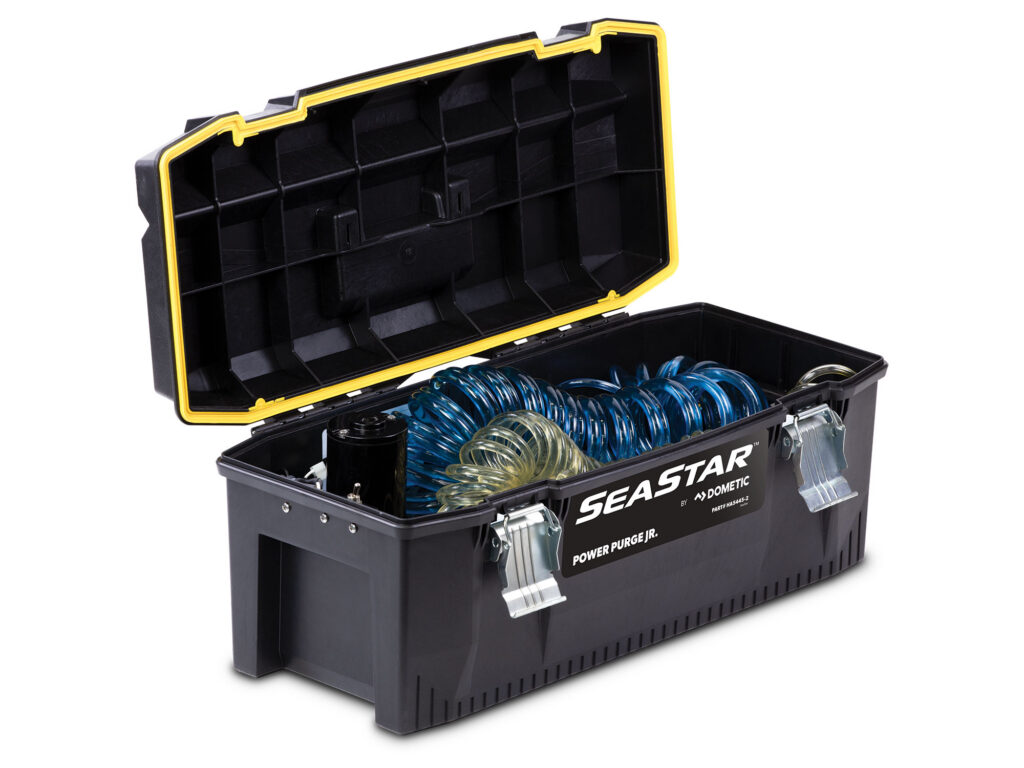
Five-Year Flush
Completely purge and refill hydraulic steering systems every five years. This removes all air and any damaging impurities. The gear is DIY available, and the job is DIY doable, but given the cost, time involved and infrequency, it may make sense to leave this one for the boatyard. (Pictured above is Dometic’s SeaStar Power Purge Jr. kit, amazon.com.)