Each spring, the boating industry looks to a single document that carries more weight than any trend report or marketing survey: the annual Recreational Boating Statistics published by the United States Coast Guard. For boaters, manufacturers, educators and regulators alike, it serves as the clearest snapshot of safety on America’s waterways. The link is updated with the most recent version of the Recreational Boating Statistics, usually in mid-June, dated as the prior year.
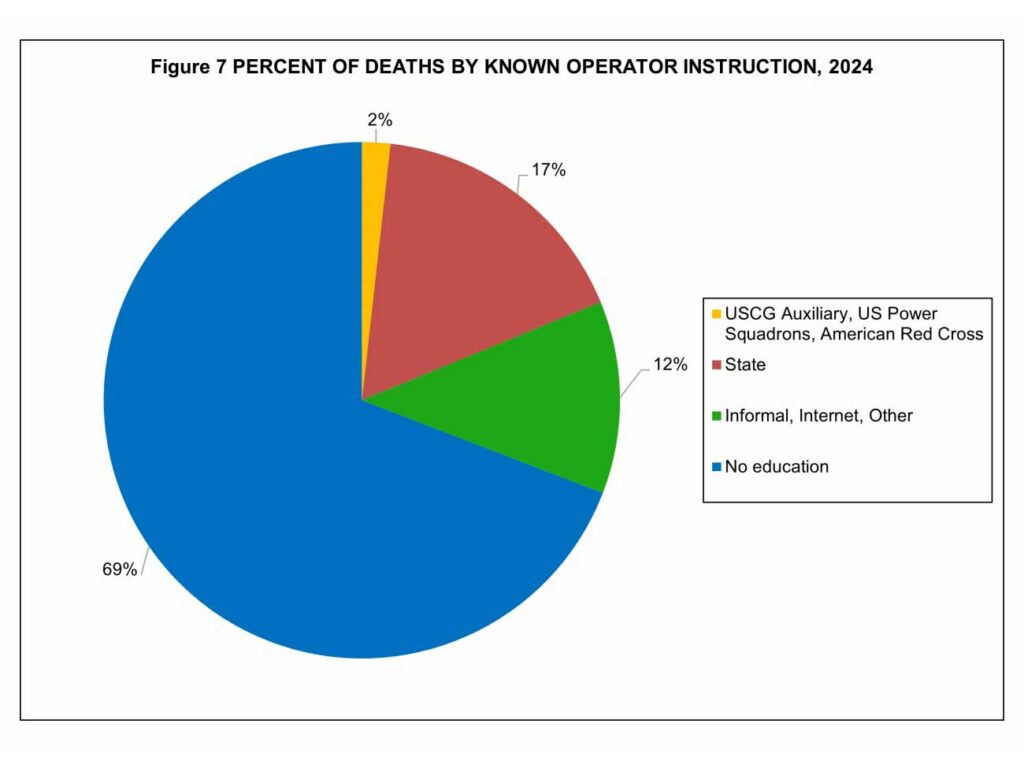
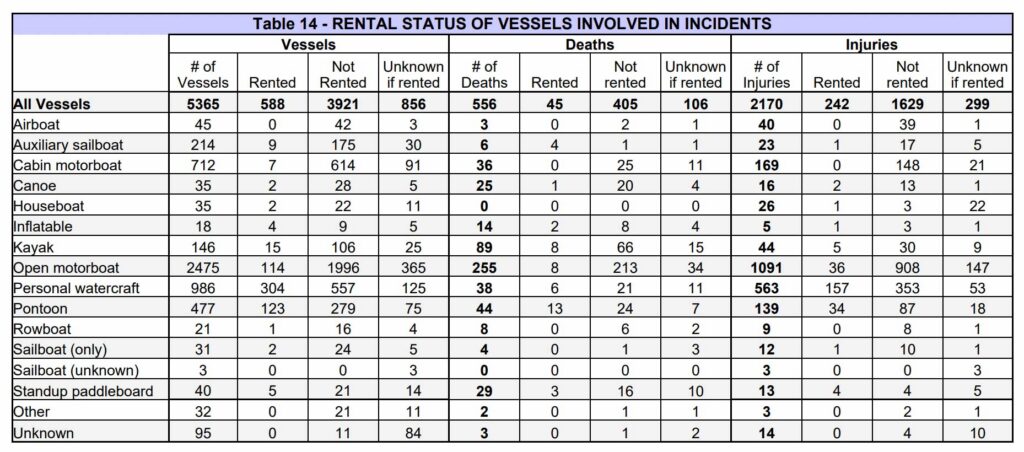
The most recent report records the fewest boating fatalities since the Service began collecting statistics more than 50 years ago. Fatalities fell 1.4% to 556 from 564 in 2023, however, nonfatal injuries increased 2.1% from 2,126 to 2,170. Alcohol continued to be the leading known contributing factor in fatal boating accidents in 2024, accounting for 92 deaths, or 20-percent of total fatalities.
The report compiles thousands of incident reports submitted nationwide, translating them into a detailed analysis of accidents, fatalities, injuries and their causes. While the numbers themselves matter, the real value lies in what they reveal about how people actually boat. Patterns emerge—whether it’s the persistent role of operator inattention, the risks associated with alcohol use, or the continued importance of wearing life jackets.
For editors and testers at publications such as Boating Magazine, the statistics provide an evidence-based compass. Safety recommendations in reviews, gear coverage and seamanship features aren’t guesses; they’re grounded in the Coast Guard’s findings. If the data shows most fatal accidents involve smaller boats operating without life jackets, that insight shapes how we emphasize safety equipment and boating practices in our coverage.
Read Next: Boating Safety Tips
Manufacturers pay attention too. The statistics often influence design improvements—from better helm ergonomics that reduce operator fatigue to clearer capacity labeling and improved reboarding solutions. Likewise, boating safety organizations and state agencies rely on the report to target education programs where they will have the greatest impact.
Perhaps most importantly, the report reminds the boating community that safety is not abstract. Each statistic represents a real day on the water that went wrong—and a lesson that can prevent the next accident.
In an activity built around freedom, adventure and family time afloat, the Coast Guard’s annual report acts as a reality check and a roadmap. By studying the data, the boating community can make smarter decisions, safer boats and better-informed captains—ensuring that more days on the water end the way they should: with stories, not statistics. ⚓