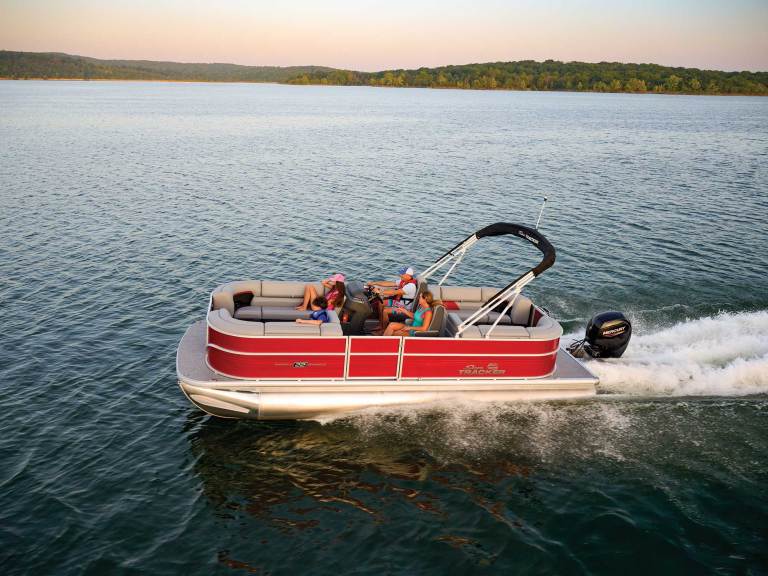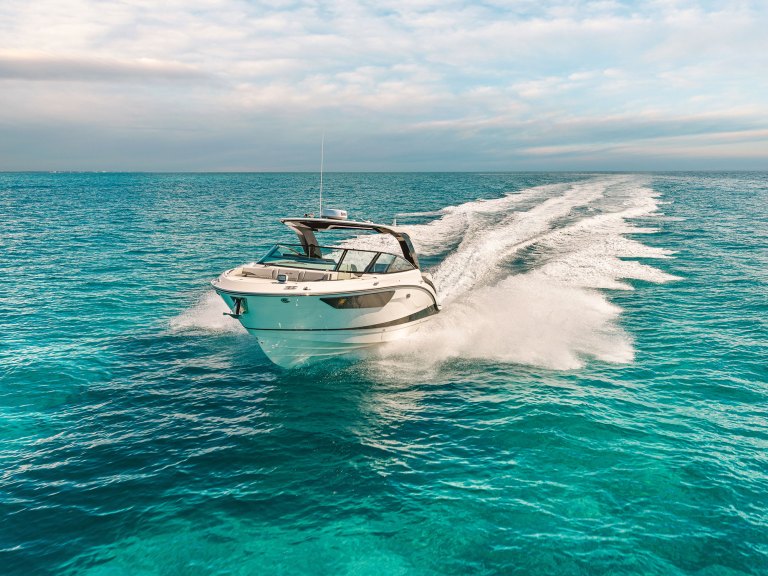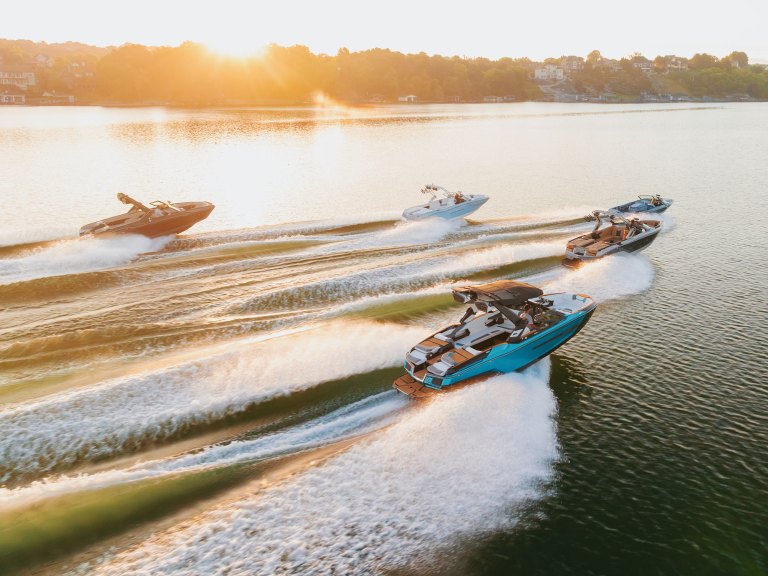
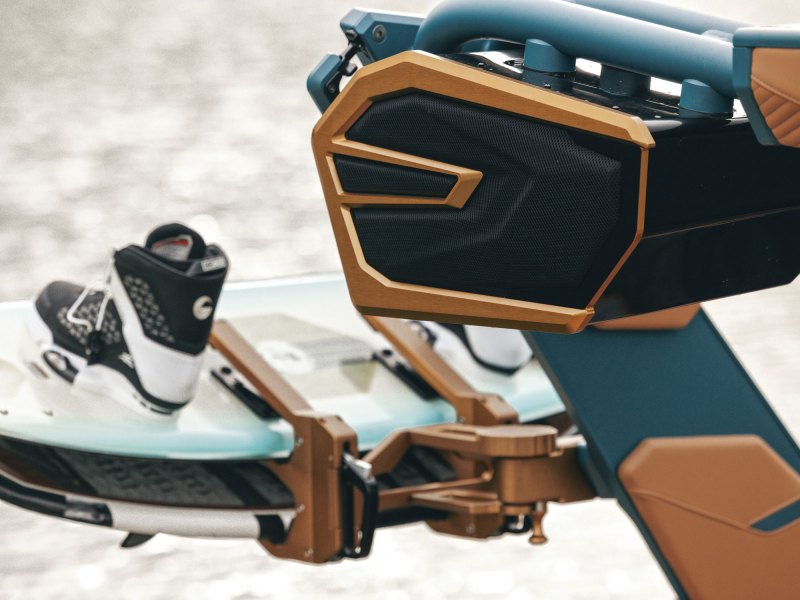
In the beginning, a wakeboard tower was just a tower—a four-legged fabrication of aluminum pipe. In the 30-ish years since the first tower appeared, this basic function—offering an elevated point of attachment for the towline—has not changed. In terms of style and features, however, the original wake tower today appears as a Model T automobile to a Tesla, no longer an add-on or afterthought but an integrated design element of the boat. It may be raised and lowered on telescoping legs and feature integrated sunshades, LED ambient lighting and logo projection, swiveling ’board racks, monster audio speakers, and an aft-view camera. Current wakesports fanatics may take these features for granted, but it wasn’t always like this.
This elevating backstory may begin with Tony Finn, the serial entrepreneur often credited with popularizing “skiboarding” through his relentless promotion of the Skurfer, a roto-molded mini surfboard equipped with elastic foot straps. Finn started marketing the Skurfer in 1985 and co-founded with Jimmy Redmon ’board brands Waketech in 1991 and Liquid Force in 1995. Finn recalls that he became aware of the benefit of an elevated tow point in the early 1990s while riding at a cable park in Germany.
“That’s probably where I got the idea for the Skylon,” Finn recalls regarding his pylon extension, introduced in 1995 and adjustable to a height of about 8.5 feet. “I went to a fabricator who was making a barefoot boom and asked if he could create a tube that fit over a ski boat pylon. We had two goals. The first was to raise the towline to make it possible to place passengers in the rear of the boat. The second was to provide upward pull to help get the rider airborne.”
Barefoot International offered a similar pylon extension called Fly High. When used over a tow boat’s amidships pylon, the Skylon and Fly High were braced with a cable and strap to the boat’s bow eye and could be quickly installed and removed. When placed over a transom pylon on a V-drive boat, the extension required bracing forward and to the gunwales. The extensions achieved the desired elevation, but there were concerns about the stress the extension could place on the pylon mounts.
Water Ski Hall of Fame photographer Tom King recalls that in the early 1990s budding ’board pros Dave Reinhart and Dean Lavelle asked him to attach a towline to the tower of his photo boat and pull them during lunch breaks at WaterSki magazine’s boat tests. Somewhere a light bulb went off.
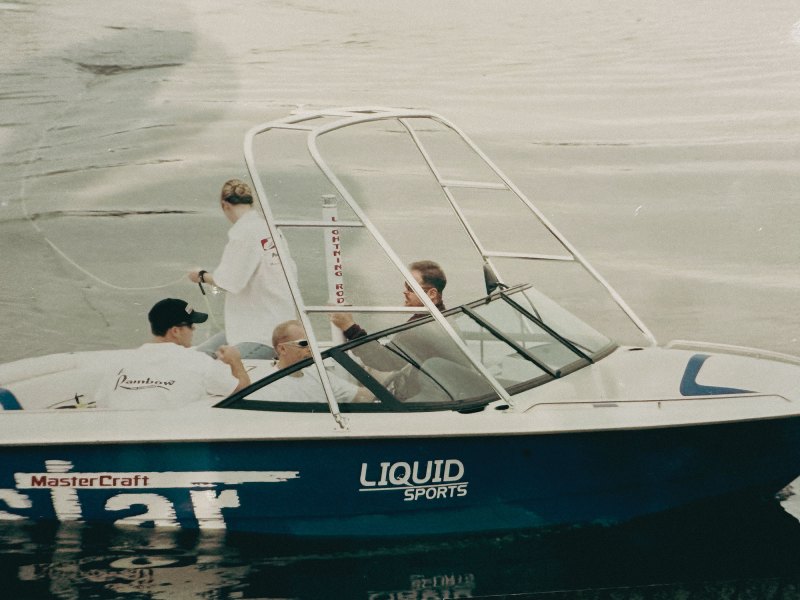
Mark Watts had just opened the Liquid Sports Marine dealership in Orlando, Florida, when a fabricator called to show him a tower designed to mount to a tow boat at the gunwales that promised to be more rigid than a pylon extension.
“He said he’d already been to MasterCraft and Nautique, and they were not interested,” Watts recalls. “It was a good idea but I had some suggestions for improvements that he was not willing to make. So, I designed my own tower on a yellow legal pad and took it to a fishing-tower fabricator. We mounted it on my personal boat and took it to a MasterCraft dealer advisory council meeting. We called it the ZeroFlex Flyer and started shipping the towers to MasterCraft dealers in 1997, who sold them as an accessory for $2,495.”
At the time tow boat builders were sitting on the sidelines, not yet convinced that wakeboarding would really catch on.
Read Next: How to Choose the Right Tow Tower
“I was a hard-core three-event skier,” recalls Larry Meddock, Correct Craft marketing manager from 1977 to 2004. “When I found out our engineers were working on a tower I fought it tooth and nail. I thought it was stupid. There was a wakeboarding exhibition at the 1997 Masters tournament at Callaway Gardens, Georgia, and I was ordered to take a Nautique with the prototype tower to the event to display as a concept.”
A few months later the Air Nautique model debuted with the Flight Control tower as the first boat with factory-installed wakeboard tower. Watts sold his ZeroFlex Flyer business to MasterCraft which offered the tower on the 1999 X-Star model, the same year the Malibu Wakesetter VLX debuted with a tower.
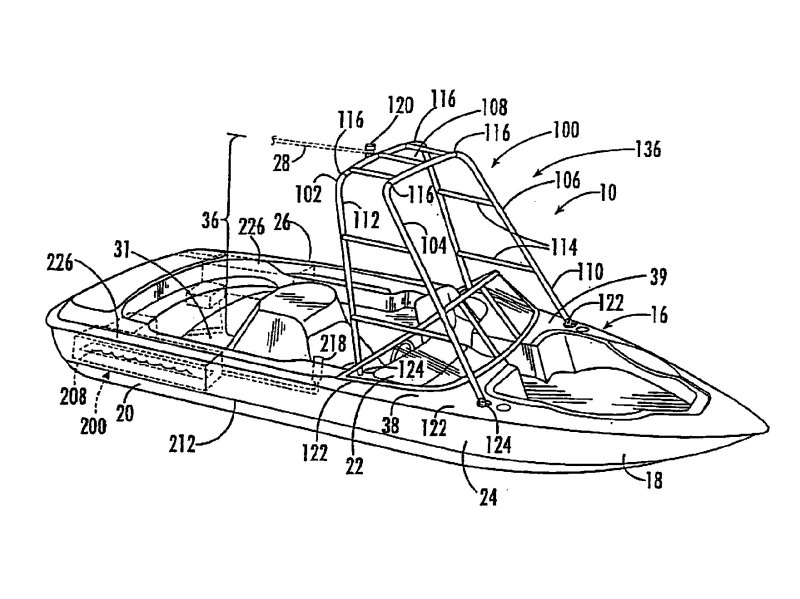
Correct Craft had the resources to apply for a utility patent for its Flight Control tower, which was awarded in 1999 (now US9315237B2) for “a vertical support unit fitted across a beam of the vessel….” Take a look at the patent today and it’s interesting to see how Correct Craft expanded its original idea to first add a ’board rack on the top, then to change its one-piece design to a two-piece tower than can be folded forward. The race was on to develop a very basic fabrication into the complex and attractive tower gracing today’s tow boats.
Towering Achievment
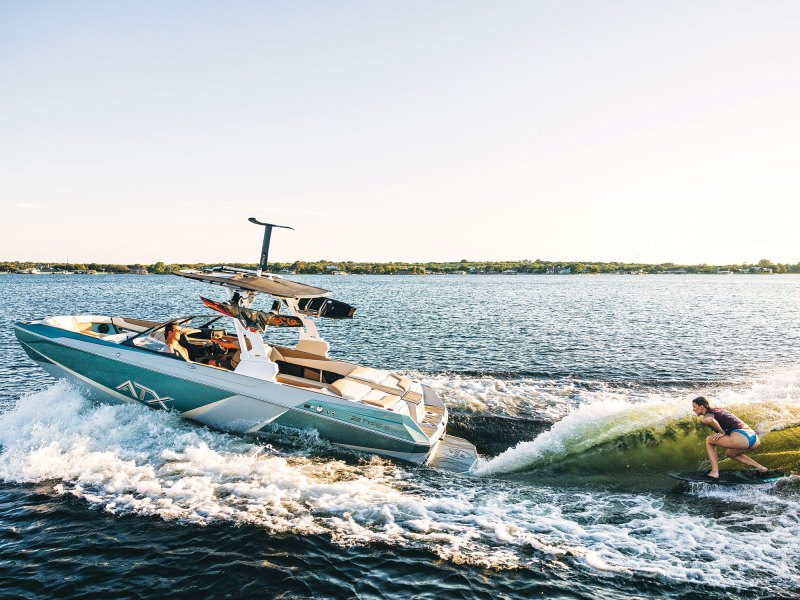
A wakeboard tower does more than add style to a tow boat—it fundamentally improves how riders perform and progress. By elevating the tow point several feet above the deck, a tower changes the angle of pull on the rope. Instead of being dragged forward and down, the rider is pulled up and forward, making it easier to get airborne and stay balanced in the air.
This higher tow point translates directly into better pop off the wake. Riders can edge harder without getting yanked off axis, resulting in more vertical lift and longer hang time. That extra time in the air is critical for advancing from basic jumps to spins, grabs, and inverts. Simply put, a tower gives riders the space and control they need to push their limits.
Consistency is another advantage. With a steady, elevated pull, tricks become more repeatable, helping riders refine technique faster. The reduced line drag across the water also contributes to smoother takeoffs.
For beginners, a tower builds confidence by making starts and small jumps easier. For experienced riders, it unlocks a higher ceiling of performance. In both cases, the wakeboard tower isn’t just an accessory—it’s a key tool for progression.
And, finally, newer towers add function on the water beyond riding. Many raise and lower at the touch of a button. A tower can house a Bimini top. Additionally, towers can hold hold speakers, boards, cameras, foils and more. —Kevin Falvey