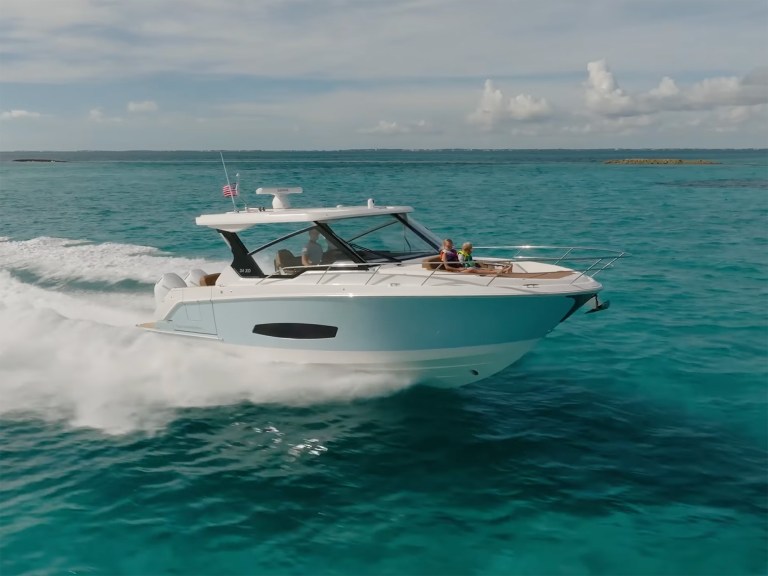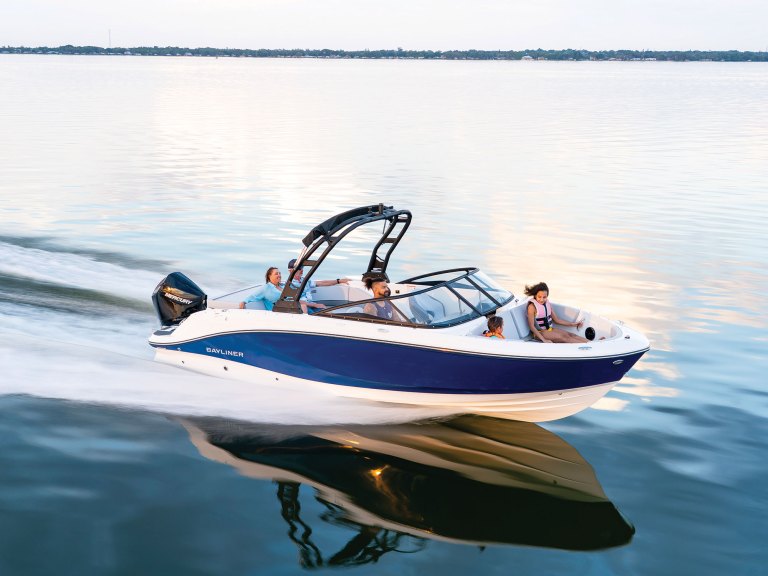
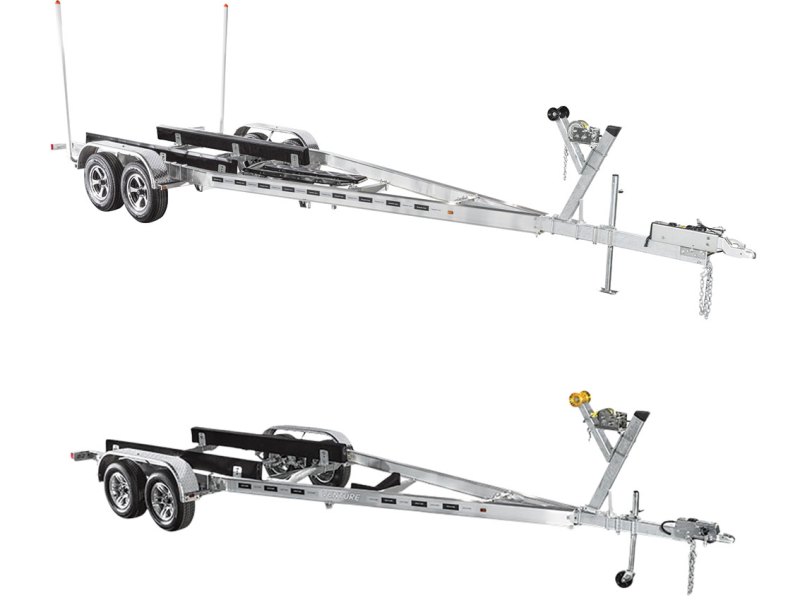
For the most part, boat trailers are analogous to offensive linemen in football, indispensable to the game, but most people notice them only when they mess up. With trailers, most boaters likely don’t think anything of them until they find themselves waylaid on the side of the highway instead of backing down a boat ramp. To find out what makes a good boat trailer, we spoke with Stephanie Van Slyke of Venture Trailers, based out of Sparrows Point, Maryland. We went through one of Venture’s top-of-the-line Commander trailers to highlight what to look for in a boat trailer.
Suspension
How your trailer rides under load is an important part of its job description. Smaller, older trailers typically use spring axles for suspension, which are cheaper to install and replace. Venture uses more-expensive torsion axles in its Commander line; they are also typically found on most multi-axle trailers. With a torsion system, all the components work in tandem with each other to prevent bounce and create a smoother ride, whether the trailer is loaded or not.
Tires
In the past few years, many trailer makers such as Venture have been moving away from bias-ply tires to radial tires. Radial tires, standard for autos, utilize steel belts installed underneath the tread, making them more durable and with a quieter, smoother ride than bias ply tires. Venture takes the extra step of using radials with balance beads inside, which helps the tires automatically adjust to different movement and weights, keeping them more balanced and preventing trailer shake. Regardless of whether your trailer tires are radial or bias ply, use Special Trailer (ST) class tires with the proper load rating for the boat and trailer.
Lights
Venture and other companies have switched from traditional incandescent trailer lights to LED lights. LEDs hold up better to water immersion in a marine environment and generally have a much longer use life. Also look to see whether the trailer’s wire harness uses plug-and-play connections rather than soldered ones. Plug-and-play connectors are much easier to troubleshoot in a wire harness, where you can quickly find out if it’s just one wire that needs to be replaced.
Brakes
Older trailers typically used drum brakes, which are cheaper to install and work fine when only trailering short distances. But drum brakes don’t dissipate heat well, so they can get hot during heavy use, leading to brake fade. They also don’t work as well under wet road conditions and are more prone to wear and corrosion from water immersion in a marine environment. Disc brakes are more expensive but have much better stopping power, handle wet road conditions better, dissipate heat better, and are way more durable than drum brakes.
When buying a trailer, you also need to be aware of the state regulations where you live. Some states require brakes on all trailer axles, and some vary depending on your gross vehicle weight. Make sure you know before you buy.
Load Guides
“This is a personal preference for many boaters,” Van Slyke said. “They come standard on our Commander Series, but about 30 percent of our customers request them for our entry-level trailers.” Load guides are long plastic poles that extend vertically from the back of the trailer bed, giving boaters a visual guide to aim between while loading the boat at the launch ramp.
Bunks
We’re talking here about bunk trailers, the most common type of boat trailer you’ll see. (Some boaters prefer roller trailers.) Most trailers use marine-grade wood, but you’ll see some trailers using plastic composite bunks or even aluminum bunks. These are typically covered in carpet, but some builders such as Venture use poly sleeves, a plastic coating that’s smoother than carpet, making it easier to launch and load your boat. Regardless of which bunks you use, make sure they fully support the boat on the trailer.
Frame
Venture often uses aluminum I-beam frames because they hold up well to corrosion and are generally lighter, which helps with towing capacity concerns. But they are more expensive. Many builders use painted steel or galvanized steel frames, which are generally heavier, less expensive and vary in popularity depending on which boating region they’re being used.
Read Next: Is Your Trailer Right for Your Boat?
Adjustability
“Boat fit is critical when picking a trailer,” Van Slyke said. “Most people don’t realize that your trailer needs to be adjusted to fit your specific boat.” In fact, most trailer issues come from improperly adjusted trailers, causing bearing, bunk and bending issues over time. You should be able to adjust your trailer’s axles, bunks, winch stand and other components to make sure your boat is riding properly while you’re driving to and from the launch ramp.
Service
Again, many people never think about their trailers until something goes wrong. If you have a trailer issue, is there a nearby dealer who can provide service? Does the parent company stand behind its product and help you resolve your trailer issues in a timely manner? This is not something you want to find out when you’re stranded on the side of a highway, realizing your boating day is over before it started.