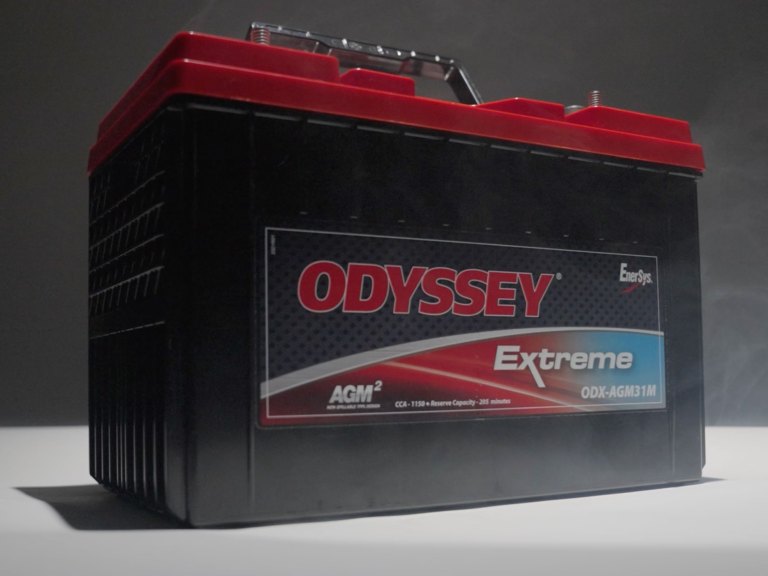
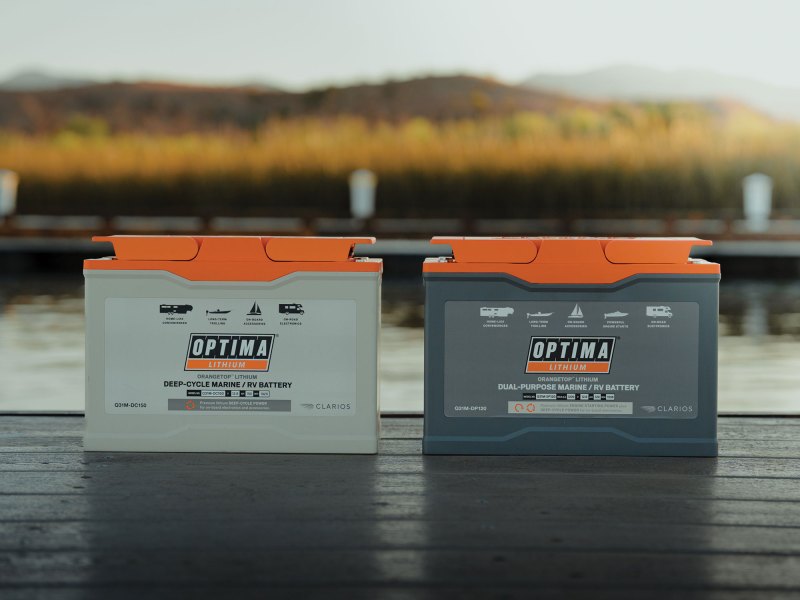
Last fall, I replaced the two AGM dual-purpose batteries aboard my Regulator center-console with Optima Orangetop lithium (LiFePO4) technology. I had used Optima AGM batteries for 15 years with excellent results, which is why I chose the maker again when deciding to test lithium in a dual-purpose starting and deep-cycle application required aboard Breakaway.
The advantages of lithium chemistry in deep-cycle applications are well proven. Tens of thousands of boats successfully utilize LiFePO4 battery banks for trolling motors, shallow-water anchors, and other high-demand cycling applications. A newer use case is the use of lithium batteries in a marine-engine starting application. The burst of high amperage required for starting can trip older battery management systems (Li-ion batteries come with an onboard electronic control package known as a battery management system, or BMS) and shut down the battery.
Charging is a question often asked regarding lithium batteries. Optima reports no incompatibility issues with alternators operating up to 14.4 volts and its batteries meet or exceed the specs for lithium starting batteries published by Mercury. That said, not all engine makers publish such specs.
My Regulator 23’s system is simple: a single outboard and a dual-battery bank that serves both starting and deep-cycle needs. There is no trolling motor or other super-high-amperage accessories. I do run a livewell all day, along with a suite of electronics, a stereo and, of course, lights after dark. This use often takes place while trolling or at anchor, when alternator output is diminished. I keep my boat in the water at a dock where there is no electric service. I rely solely on the engine’s alternator to recharge the batteries. This setup is typical aboard small boats and calls for dual-purpose starting/deep-cycle-type batteries.
My Merc’s alternator puts out 85 amps at wide-open throttle and 20 amps at idle. Running home at 3,600 to 4,000 rpm from 25 miles offshore, for example, usually recharged the batteries fully. It was full-day inshore trips, without a long, high-speed run, where I was pushing it.
With two Optima Bluetop D31M AGM batteries, I had to be attentive to my amperage draw—sometimes starting the engine and running it while anchored or drifting to keep the batteries from being drawn down too much. These AGM batteries weigh 59.8 pounds each, put out 1,125 Marine Cranking Amps (MCA) and feature a 75-amp-hour rating with a 120-minute reserve at 25 amps draw.
In comparison, a single Optima Orangetop Q31M-DP120 weighs 43.2 pounds and offers 1,200 amps of cranking power. Reserve capacity isn’t published for lithium batteries because the BMS will shut the battery down prior to full discharge to prevent damage. Shutdown may occur at a different point depending upon the use at the time. When pressed, Optima’s Daryl Brockman said, “I’m reluctant to give a (reserve capacity) number, but would estimate 273 minutes.”
Of note is a LiFePO4 battery’s ability to deliver performance until being drawn fully down and not be damaged. Lead-acid batteries typically become damaged when drawn below 50 percent of capacity. Lithium batteries, therefore, provide their full capacity and should also enjoy a longer service life as a result.
These specs make for a telling comparison. The AGM batteries are heavier for less power output. Besides adding weight to the boat, this makes them harder to handle during installation and removal, which is spring and fall in my climate. Additionally, the LiFePO4 Orangetop batteries deliver more starting power and can power more equipment for a longer period of time.
Charging performance is equally impressive. The Orangetop accepts higher charging rates than most AGM batteries, allowing it to recover more quickly after heavy use. With just a single Orangetop battery wired in to my boat, I achieved better performance than two AGM batteries, while enjoying faster recharging.
Switching to lithium also comes with benefits resulting from the BMS. The batteries are wired into the boat’s National Marine Electronics Association’s (NMEA) network and also communicate via Bluetooth. I can now monitor my battery condition on my phone via the Optima app. I can see charging, discharging, cell balancing, and more. Push notifications and safety alarms for abnormal conditions such as over-voltage, short circuits, or extreme temperatures are also made available. Because of the Optima BMS and its app and NMEA 2000 connectivity, they elevate the batteries beyond something that just provides power to the system to a fully integrated component aboard my boat, just like the engine and electronics. There is never a question of how much battery did I use and how much power do I have left. I can see the answers to those questions. Plus, the batteries themselves have a simple LED alert system built in on top for quick “eyeball” reference.
Other items I really appreciated: Four flush/recessed battery terminals and the integral folding handle make hookup and handling easier.
Read Next: AGM vs. Lithium Batteries
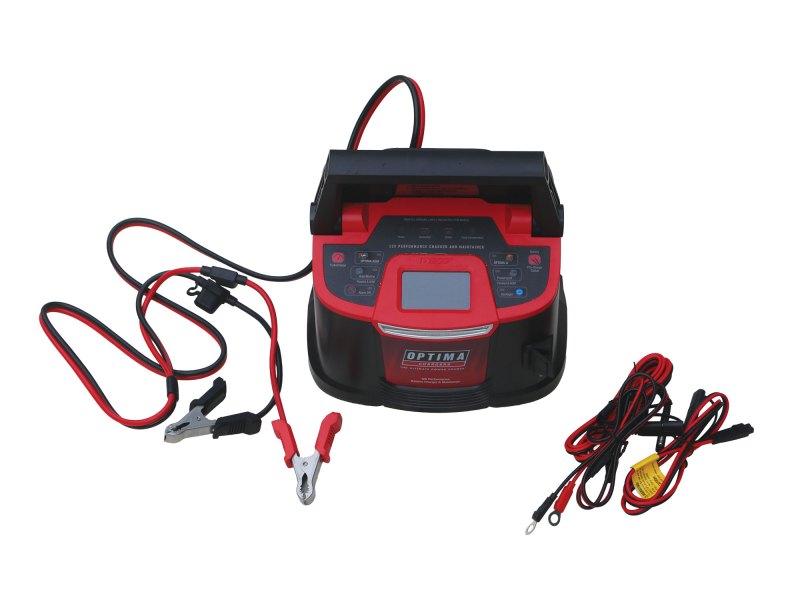
Swapping out starting/dual-purpose AGM batteries for LiFePO4 batteries such as the Optima Orangetop proved to be a success. In fact, just one Orangetop Q31M-DP120 can deliver more performance than two Bluetop D31M batteries. The lithium batteries are lighter, deliver more cranking amps and can be drawn down further and for longer. So when considering the price difference—which is three times that of some AGM batteries—consider that you are essentially getting a “bigger” battery in about the same physical footprint. Certainly, you must make sure your marine alternator is compatible with lithium technology. And, you’ll need a lithium-specific battery charger. Those aside, the benefits cited, plus the connectivity makes a compelling case for batteries such as Optima’s Orangetop in dual-purpose marine applications.
In addition to the Q31M-DP120 tested, Optima also makes full-on deep-cycle batteries in the Orangetop marine lithium series. Learn more about both at optimabatteries.com.