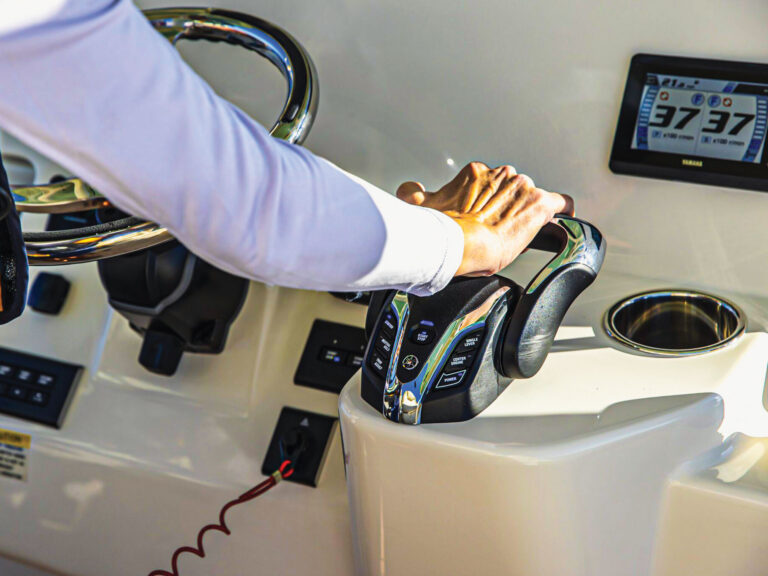
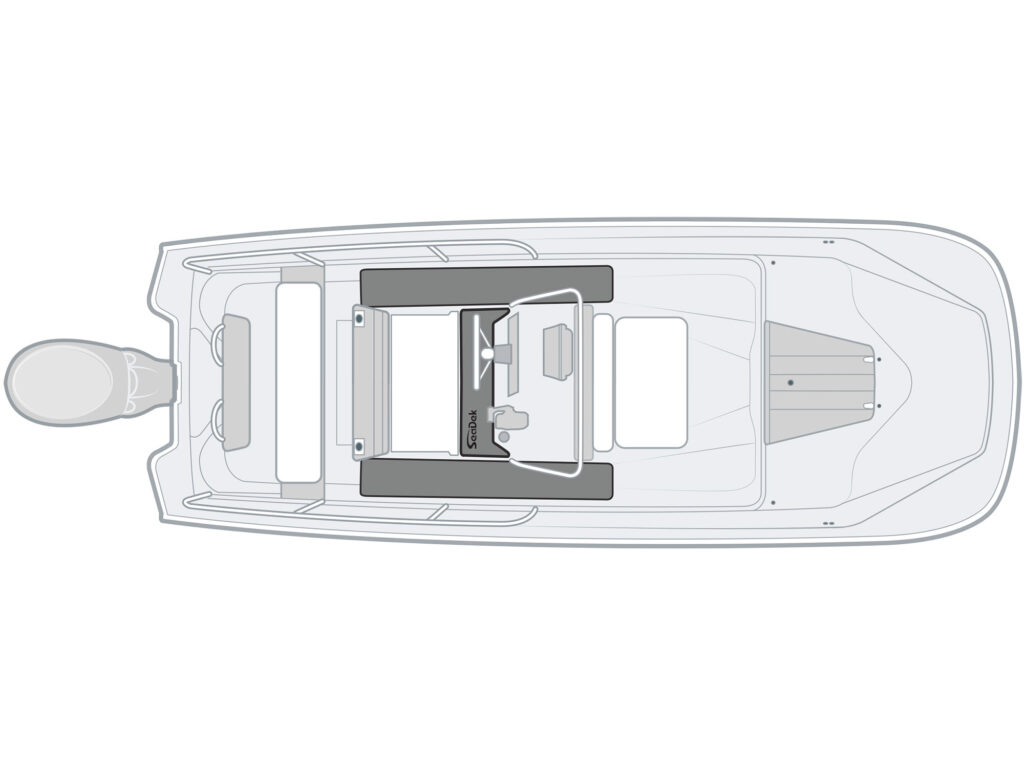
When SeaDek began offering custom-cut EVA closed-cell foam padding in 2004, I added a pair of long, narrow deck pads on either side of the center console and a third deck pad at the helm of my trusty 1993 Boston Whaler Montauk. The three-pad arrangement provided crew comfort and nonskid traction over the next 20 years.
That’s enough foot traffic to wear out any boat deck. The thin beach-sand-colored upper layers had worn off, though the underlying black layer of foam still cushioned our feet and the adhesive still held. That SeaDek had served us well, but it was time to replace it. While our project was relatively small, the same principles, tools and techniques apply to more expansive SeaDek retrofit endeavors. They will take more time and materials, and might benefit from one or more buddies helping you out, but the process is the same.
SeaDek is one of the most popular brands of EVA nonskid today with certified fabricators and installers all over the world. While a certified installer will be happy to remove the old and install new SeaDek for you, we turned this into a DIY project. Here’s how we went about it.
Skill Level: 1.5 of 5
Finish Time: Approx. 4 hours
Tools and Supplies
- Three custom 8-mm-thick deck pads (approx. $600; seadek.com)
- SeaDek slicer to cut through the pads’ paper backing ($7; seadek.com)
- Bevel tool for shaping cutouts ($24.99; seadek.com)
- Vise-Grip pliers
- Plastic putty knife
- Steel-blade putty knife
- Sharp razor knife with fresh blade
- 99 percent isopropyl alcohol
- Mineral spirits
- Acetone
- Rubber gloves
- Dawn dish soap
- Stiff-bristle deck brush
- Masking tape
- Clean microfiber towels

Order New Decking
To begin the replacement of the SeaDek pads, we measured the three existing pads and emailed the dimensions to SeaDek using the “Get a Quote” form at seadek.com. We then selected a color combination (storm gray over charcoal), surface texture (brushed), and thickness (8 mm). A SeaDek Pro certified fabricator shipped the new pads within two weeks. As you proceed to the next step, it is best to work outdoors with personal protective equipment (PPE), including protective clothing, eye protection and a respirator.
Read Next: How to Select SeaDek Nonskid

Remove Old Decking
We carefully pried up the edges of each deck mat with a plastic putty knife, then gripped the mat with both hands and pulled slowly. SeaDek suggests that if the foam sticks and tears, apply small amounts of acetone underneath and continue lifting with the putty knife. We didn’t have that problem, but employed a pair of Vise-Grip pliers as a secure handle for pulling the pads away. It was important, though, to avoid gripping a pad too tightly, which caused it to tear. This process took 30 minutes.

Clean the Deck
This was the most painstaking step. With the entire pad system removed, we hosed off the deck and scrubbed it with Dawn dish soap and a stiff bristle brush. Some residual adhesive remained on the cockpit sole. We applied mineral spirits with a microfiber towel, let it sit for a few minutes, and scuffed it carefully with an aluminum-bladed paint scraper. We had to repeat this process three times to remove the adhesive film. Then, donned in full PPE, we wiped away the mineral spirits with acetone. This step took about 2 hours.

Prepare the Deck
One more time, we thoroughly washed the boat deck with Dawn dishwashing detergent to help ensure that no residual contaminants remained to interfere with the new peel-and-stick SeaDek adhesive. We wiped the surface of the deck with clean microfiber towels and allowed it to thoroughly dry in the hot sun. We then wiped down the deck again with 99 percent isopropyl alcohol and a fresh batch of clean microfiber towels. This portion of the project required about an hour, including sun-drying times.

Install New Decking
To install the self-adhesive deck pads, we carefully peeled back a 4-inch section on each side. We laid each side pad into its place, pressing the exposed portion of the foam and adhesive firmly onto the deck, then reached underneath each end and pulled back the paper, allowing the now-exposed adhesive to adhere to the deck. The helm pad was the trickiest, because of a tight fit. Once the pads were down, we walked over them, making sure to press down the entire surface. The entire last step took 30 minutes.