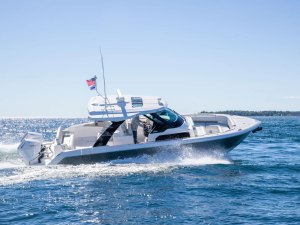
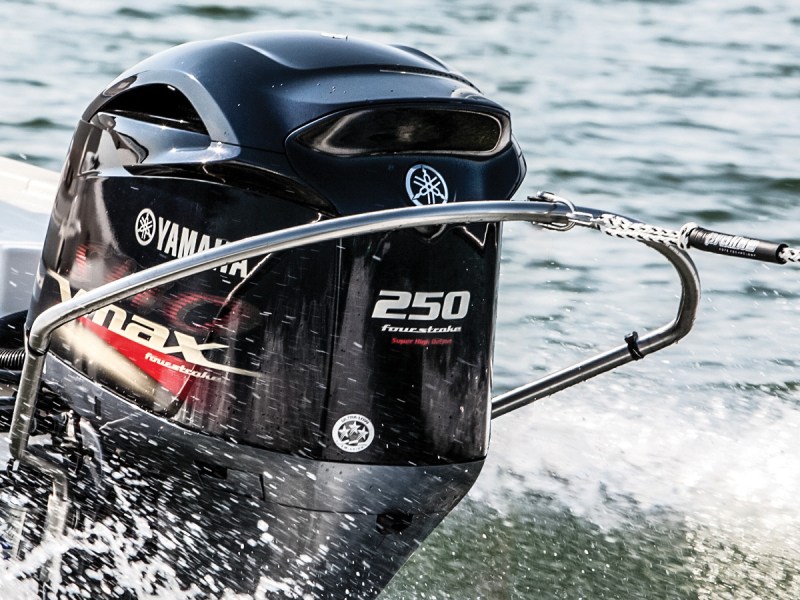
I can’t think of anybody who doesn’t enjoy getting towed behind a boat, whether it’s for wakeboarding, water-skiing or for tubing. We captains get a kick out of it too.
Just as we should turn the engine off when approaching people in the water and never tow people near docks or buoys, we must also ensure that our boat’s tow points are properly installed and used correctly. Whether you are adding a tow point to your existing boat or are assessing one already installed on a boat you are considering buying, use these tips to make sure it is up to the task for your type of towing.
Through-Bolts
A through-bolt is a threaded fastener which passes all the way through the deck or hull. It is secured on the underside or backside by a nut. Through-bolts are more secure than screws. They may prove equal to screws in resisting shear (sideways) forces, but are far superior in resisting tension (pulling). The forces applied to the fasteners securing a tow point are multiplied by the height of the hardware. A low-profile ring multiplies forces slightly, while the leverage exerted by a pylon is an enormous force amplifier. All ski tows must be through-bolted.
Backing Washers
Along with through-bolts come the use of washers and metal, plywood, or plastic backing plates. These help the bolts further resist pulling out under enormous forces applied by a towed tube or slalom skier. They also spread loads over a larger area, helping to prevent stress cracking in the surrounding fiberglass. In addition, backing plates allow you to fully tighten the bolts without crushing the boat structure.
Transom Rings
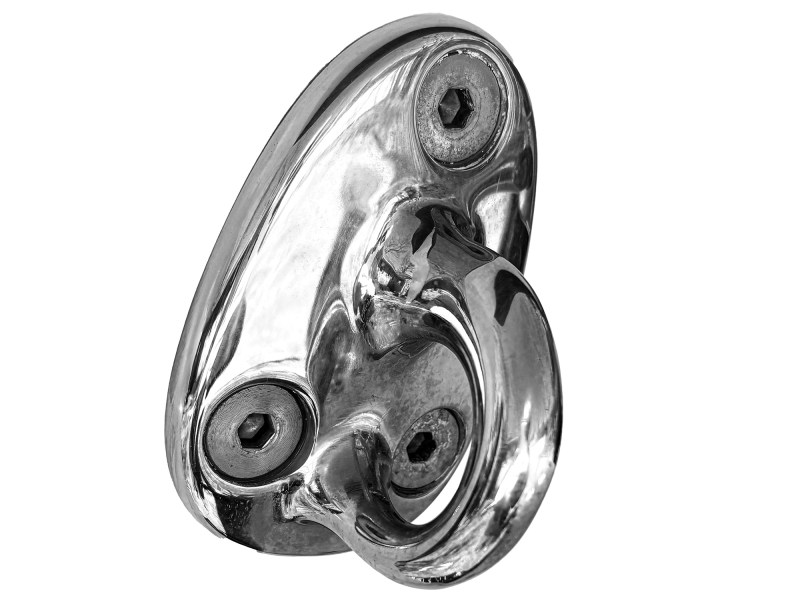
These come installed aboard most boats as U-bolts. Their first purpose is tying the boat down on a trailer. You can lift a boat by some transom rings. However, not all transom rings are installed like that. We’ve rarely seen any that were not through-bolted, but do make sure of the installation before you tie on a towline. It’s best to use transom rings with a tow harness so that you tow from both rings. This is especially helpful for outboard boats to prevent the line from fouling on the engines.
Ski Eye
Whether you call it a ski tow, bitt, or eye, this is a common, low-profile fitting aboard sterndrive, jet and inboard-powered boats. Some are pop-up models that remain flush until needed. Cool. The ski eye also provides a quick tie or release of a towrope’s looped end. This is not ideal for outboard boats since the location of a ski eye ensures that the engines will interfere with the tow line.
TurboSwing
A boon for outboard boaters, the TurboSwing (turboswing.com) mounts to the strongest part of the boat: the transom. It ensures no fouling with the engine and allows for pulling of tubes. Pylons, raised tow bars and towers should not be used to pull tubes, because enormous forces are exerted when the tube “submarines.” TurboSwing clears outboards and lets you pull tubes. It also allows pulling multiple riders and the sliding pulley makes for a less jerky pull.
Read Next: Choosing the Right Watersports Tow Point
Ski Pylon
We are not referring to the pylon aboard a dedicated ski boat, mounted in the center of the cockpit and braced by guy cables. What we are referencing is essentially a pole mounted aft on a boat that raises the line to give a water-skier a better angle and/or to clear the outboards. While it’s great for skiers and ’boarders, don’t tow inflatables from a pylon, as the stresses of a tube that tries to dive (and they all do eventually) combined with the excess leverage created by the pylon’s height can damage the boat or cause it to swerve suddenly.
Towers
Wake towers provide the height for wakeboarders to catch big air. Towers also hold lights, speakers, boards, Bimini tops and more. Towers should not be used to tow inflatable tubes. As stated, inflatables can and do “submarine,” which creates sudden and immense forces that can cause you to lose control of the boat.