The most dangerous feature on thousands of American rivers doesn’t look dangerous at all.
When the deadly hydraulic below a low-head dam grabs hold of a small boat, kayak or inner tube, it doesn’t let go. A video shared this week by first responders in Phelps County Missouri shows that terrifying power, as firefighters worked to save a family of four who had floated over the Lake Springfield dam in a kayak and two inflatable tubes.
Video captured by onlookers shows a rigid inflatable rescue boat being pulled into the boil beneath the spillway. The boat capsizes, spilling first responders into the water, where they struggle to stay afloat despite their oversized rescue life jackets and swiftwater training. Multiple first responders were hospitalized and treated for injuries sustained during the rescue.
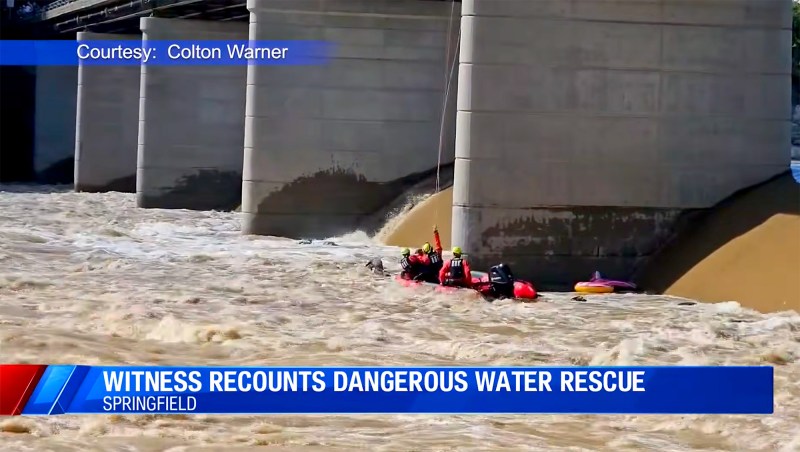
Somehow, rescuers were able to reach a 12-year-old girl and carry her to safety. Her mother and two sisters drowned. The tragedy is a solemn reminder of the dangers low-head dams pose to all boaters and river-runners. The vulnerability of trained professionals and their motorized rescue boats highlights the extreme danger posed by these man-made structures.
River-runners call low-head dams “drowning machines” because they are among the most lethal hazards on waterways and are often the hardest to spot. According to American Rivers, the structures are designed to allow water to continuously flow over the crest of the dam, which can create a washing-machine-like hydraulic at the base of the dam. This washing machine effect is what pulls unsuspecting swimmers, paddlers, and boaters under with extreme force.
Paddlers and tubers are especially vulnerable, but so are motorboats. Anglers who fish the tailwaters of low-head dams can attest to the magnetic pull of these hydraulics. If you fish such waters you’ll hear it from the old-timers: Be careful. Don’t get too close.
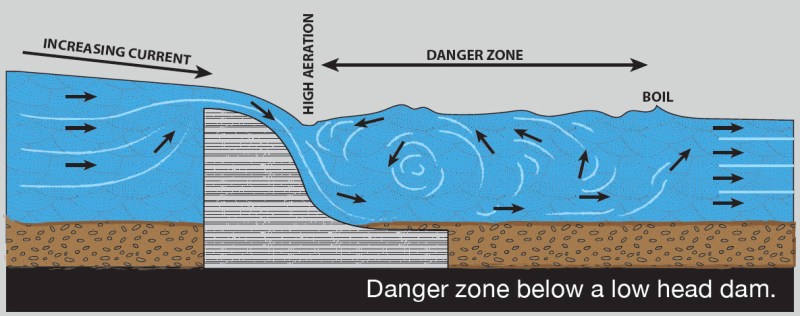
As the Phelps County video attests, the force of these dams is so powerful that safety gear becomes less effective. Even on small rivers, the force of the backroller can trap your boat against the face of the dam and pull you under the water—even while wearing a life jacket.
Low-head dams may appear small, but they are among the deadliest hazards on American waterways. The Low-Head Dam Safety Initiative has recorded 789 fatalities at low head dams in the United States, with one dam claiming 29 lives. The water near these dams can appear calm and safe when approaching from upstream, but the hydraulic force can pull you and your vessel underwater, giving you little to no time to react or change course.
“When the hydraulic jumps used to power dams become submerged, this can result in a reverse current, creating a life-threatening hazard,” according to the Department of Homeland Security.
These structures are also more common than you might think, as thousands of low-head dams exist throughout the United States. While many of these dams may appear calm and safe in idyllic conditions, heavy rains and increased water flow can turn them into death traps, as was the case in Springfield over the weekend. According to the Springfield Daily Citizen, heavy rainfall in the hours before this incident on Sunday, June 14 created dangerous conditions.
Springfield Fire Chief David Pennington told the Daily Citizen crews recovered the body of a 17-year-old girl on Tuesday, and her 19-year-old sister on Wednesday, three days after the accident. The body of the girls’ 40-year-old mother was still missing Thursday afternoon. Pennington said 40 first responders were working on the recovery effort, including drone operators and divers with the Missouri State Highway Patrol.
The tragedy and the challenging rescue efforts serve as a sobering lesson of why all boaters must know how to spot and avoid low-head dams. Because these structures are often difficult to spot – especially from upstream – boaters should keep a lookout for signs and buoys indicating their presence.
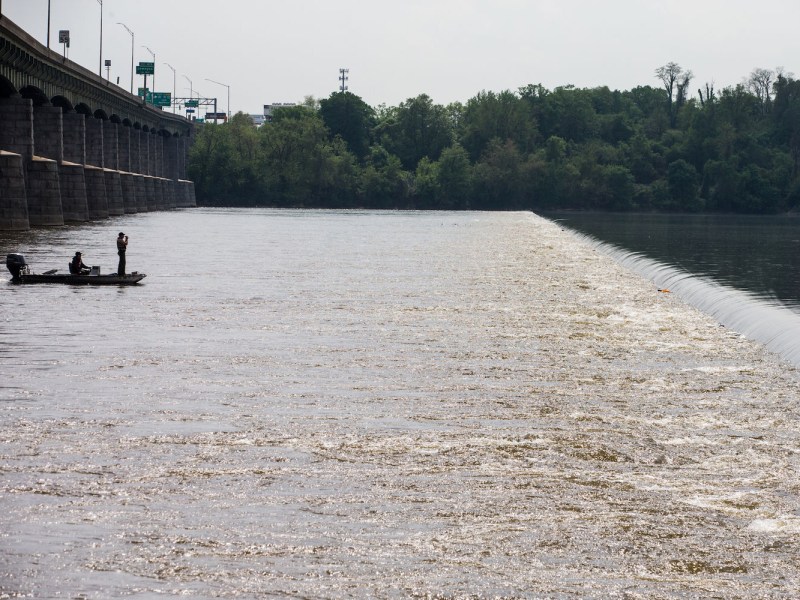
Not every low head dam is marked. If you see a straight ‘horizon line’ from bank to bank, don’t take a chance. Stay well clear, or pull to shore to scout on foot. If approaching from downstream, low head dams are easier to spot but still plenty dangerous. Stay at least 100 feet from the boil line to avoid being pulled into it.
Before boating on an unfamiliar river or lake, research your route. This will help you avoid hazards, including low-head dams. These structures are significantly more powerful and dangerous when water levels are high, so you should avoid venturing out after heavy rains in your area.
You must also pay attention to local advisories and consider speaking with local boating professionals before launching your vessel. There were local efforts in Springfield to keep boaters safe over the weekend in hopes of preventing tragedies like the one that unfolded. For example, the Springfield-Greene County Park Board suspended kayak and canoe rentals on the day of the accident, according to KFVS12.com.
Low head dams are deadly, but with knowledge and research, you can avoid them. Always familiarize yourself with waterways before venturing out, and remember to make safe choices any time you’re on the water.