There are two general categories of antifouling paint from which boaters must choose: hard paint and multiseason (ablative or self-polishing) paint. Each provides protection but are approached in different ways. Understanding how they work, and applying this understanding to the way you use your boat will help you buy the best antifouling coating for your situation.
Hard Antifouling Paint
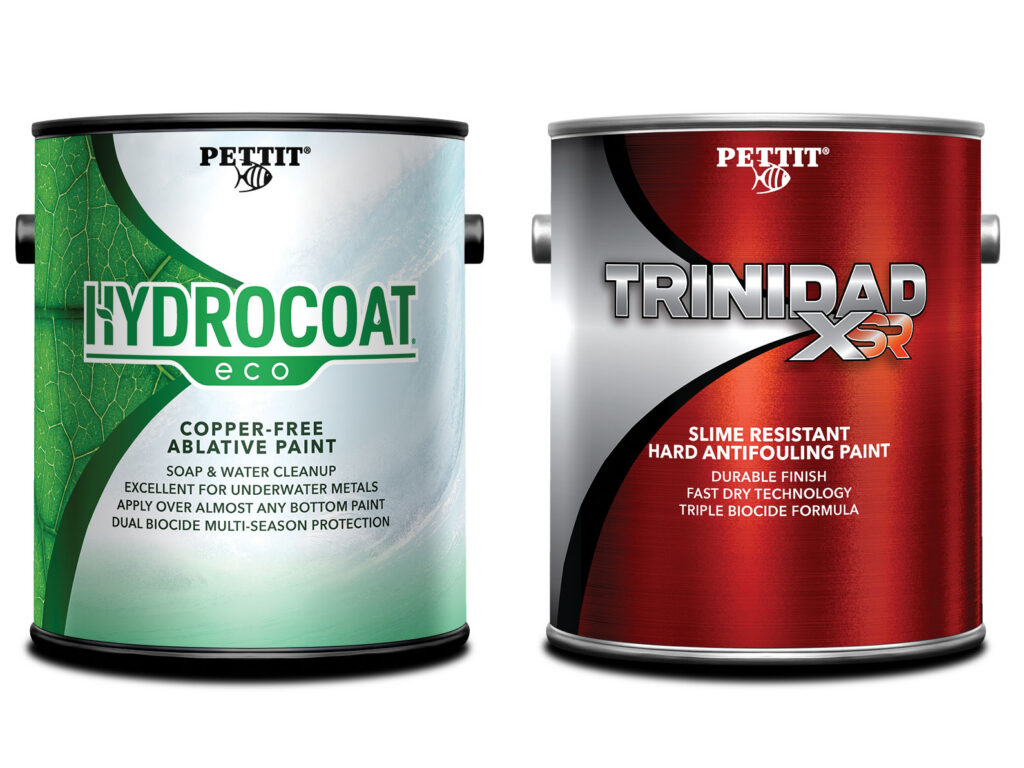
This paint uses a tough resin matrix that holds biocides—typically copper—in place. Pettit’s Trinidad XSR, which I have been personally using, is one example. The biocide leaches out slowly to deter marine growth, while the paint film itself remains largely intact. This durability allows hard paint to stand up well to trailering, beaching, frequent scrubbing, and high-speed operation, making it a popular choice for performance boats, racing sailboats, and vessels that are regularly hauled in and out of the water.
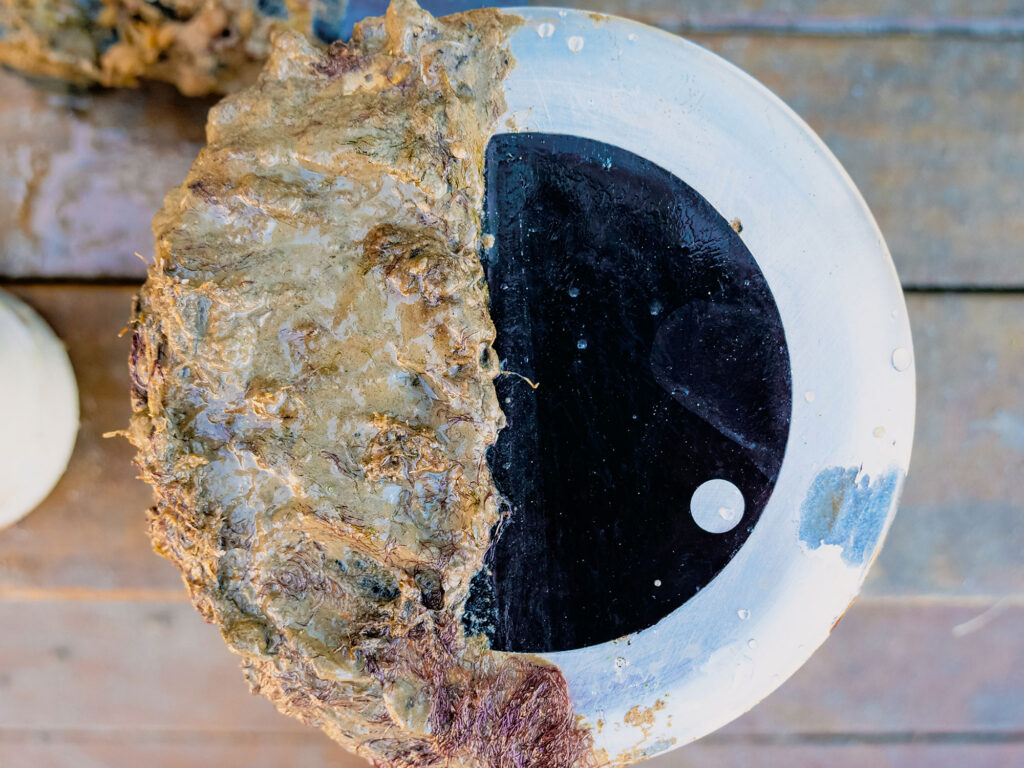
The downside is buildup. Because hard paint doesn’t wear away, each repaint adds another layer. Over time, this can lead to the thick, rough, pockmarked bottom we’ve all seen—one that robs performance. Periodic sanding or stripping becomes inevitable. Hard paints also tend to lose effectiveness once the biocide near the surface is depleted, even if the paint film still appears intact.
Multiseason Bottom Paint
This paint is often called ablative or self-polishing paint or copolymer coatings, and it takes the opposite approach. It slowly wears away as the boat moves through the water. This controlled erosion continuously exposes fresh biocide, keeping the bottom protected for longer periods—often multiple seasons, if multiple coats are applied—without heavy buildup. Because old coats gradually disappear, the bottom remains smoother over time, which can help maintain efficiency.
Ablative paints may be solvent-based, or even water-based and copper-free, such as Pettit’s Hydrocoat ECO.
There are tradeoffs, however. Ablative paints are generally softer, meaning they don’t tolerate frequent trailering, pressure washing, or heavy scrubbing as well as hard paints. Boats that sit idle for long stretches may also see reduced effectiveness, because the polishing action relies partly on movement through the water. In high-current areas or for boats that run at sustained high speeds, wear can be faster than expected.
Note that “multiseason paints” can be applied and used as single-season coatings as well.
Read Next: We Test: Foulfree by Propspeed
A Closing Tip
Boaters who find the need to scrub the waterline and transom often will sometimes paint these parts of their boat with a hard paint, even if the hull bottom is coated with ablative antifouling. Remember, neither option is universally “better”—but matching the paint type to the way you use the boat, and your feelings about performance and annual painting, are main drivers in buying the right antifouling paint.