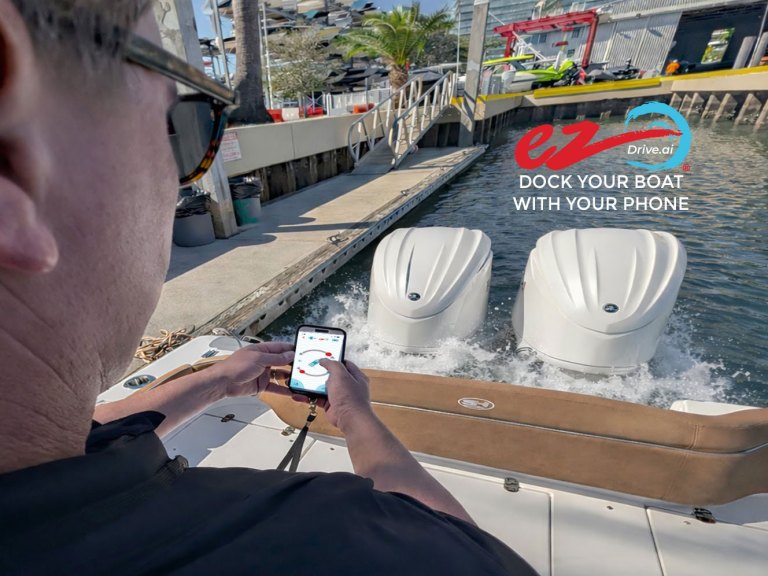
The innovations that have made it into and onto our boats the past few years have been staggering. Between joystick-steering systems, automated docking, automatic trim systems, gyro stabilizers, night-vision technology, super-intuitive touchscreen navigation displays and more, it’s never been easier to own and operate a boat. With all of this, there are still timeless aspects of seamanship that every boater needs to know and use. This is precisely why our Seamanship column is still one of our most important pages each month—no matter how much technology you have onboard, you still need to know the basics when you head out on the water. Here are four gems culled from our Seamanship column over the years.
Have a Plan B
In his column for our January 1958 issue, Elbert Robberson addressed how to prepare an inexperienced crew to help in emergencies. “First of all,” he wrote, “unless you know firsthand that your passengers are skilled at boating, assume they know nothing of what goes on inside the gunwales.” Robberson goes on to suggest assigning crew members different tasks, giving them each a role to play on board. Have one handle cushions and life jackets, for example, another handle the dock lines, and review the helm and engine with another. That way, everyone has a specific task when you need help. As Robberson wrote, “From the time they board the boat, get them interested in doing things, and they will not only be better company and enjoy the boat ride more, but they will also be good for something in an emergency.” This concept is why we use the word “crew” instead of “passengers.”
Anchors Away
In her January 1977 Seamanship column, Elleen Holm Matthew wrote about anchoring in different conditions. While modern gear has made some points moot, her thoughts on scope hold true. “With a short scope, the holding power of even the best and heaviest anchor is reduced because the high angle of pull tends to break the anchor out,” she wrote. “Government tests have shown that a scope of 7 to 1 is right for average conditions, at least 5 to 1 for ideal conditions, and 10 to 1 during a blow.”
Do No Harm
Bob Armstrong wrote about seamanship for the magazine in the 1980s, and in our March 1983 issue, he addressed the confusion some boaters have regarding right of way on the water. First and foremost, it’s a boater’s job to prevent collision. On this, he opined: “And that’s why one of the underlying principles is the more-maneuverable vessel stays out of the way of the less-maneuverable. Sailboats watch out for rowboats, powerboats watch out for sailboats, we all watch out for work stations. … Likewise, our smaller craft are supposed to give way to ships in tight quarters because we can get out of their way easier than they can get out of ours.”
Read Next: The Importance of Old-School Seamanship Skills
Backing In
Former staff pundit Stuart Reininger laid it on the line in our November 1998 issue when he declared about docking in a slip: “Sailboats bow in. Powerboats back in. We have a tradition to uphold.” (We still like to uphold it.) When the wind and current are stacked against you, Reininger recommended using the spring-line method to slip your boat. He wrote: “Lay the boat along the pilings fronting the end of the dock or, if there are no pilings, along the end of the dock itself, with the stern protruding into the slip. Wrap a line around a midship cleat. … Loop it around the piling or a cleat on the dock with the bitter end in your hand and back down. Turn the wheel toward the dock, and start backing in, set the line tight until the stern begins to work around, then ease off as the stern swings into the slip and you’re home-free.”
Quick Tip
When it comes to docking, even with modern technology, there’s a timeless saying to help you work your way in. “Go slow like a pro, fast like an ass.” In other words, slow and steady wins the docking race.