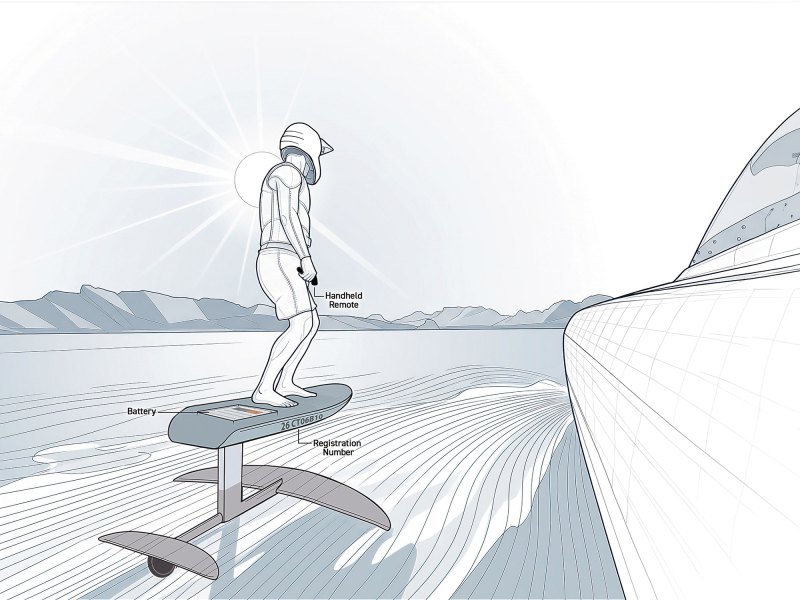
In the fall of 2019, while attending the Fort Lauderdale International Boat Show, I got a product pitch from an Australian entrepreneur inviting me to try out his new water toy. He had a foil board, basically like a surfboard with an underwater wing for lift, powered by an electric motor with a built-in battery system, controlled by a handheld remote. After giving me a brief tutorial, we set off into a canal that led into the Intracoastal. I took off, and soon it felt like I was surfing and then, once I learned how to control my speed and weight distribution, I was flying. It was exhilarating, and I thought to myself, this is going to be big. Really big.
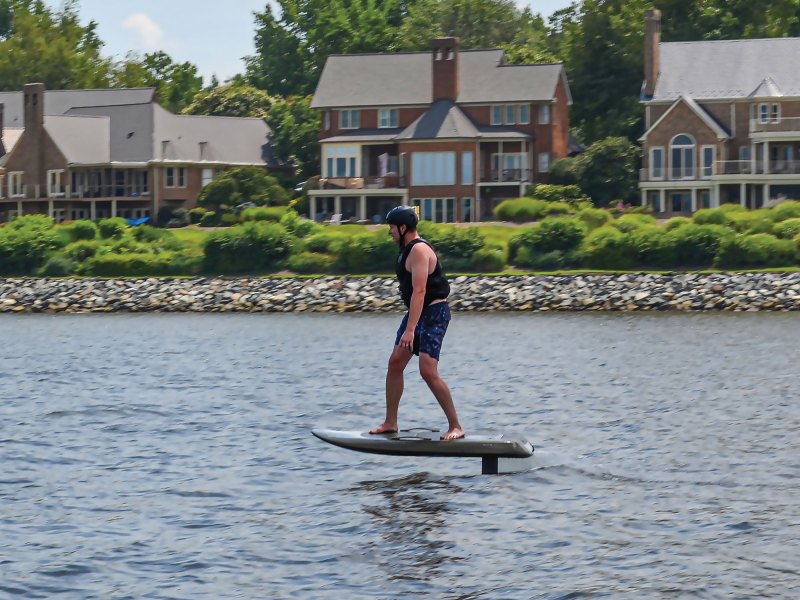
Fast forward to the present, a few years after Brunswick bought that small Australian startup called Flite, and electric foils (efoils) have taken off. Several companies now make them and you’d be hard- pressed not to see at least one zip by on any given weekend on the water. So, they’re on the water, and they’re under power, begging the question: Is an efoil a boat? “It doesn’t fit the typical model of a boat,” said Brian Goodwin, director of Standards and Compliance for the American Boat and Yacht Council (ABYC). “But the Coast Guard has determined that an efoil is indeed a vessel.”
Since the passing of the Federal Boat Safety Act in 1971, ABYC has worked in conjunction with the US Coast Guard (USCG), the National Marine Manufacturers Association (NMMA) and state regulators to come up with safety standards for all boats and all the new innovations and technologies that have since followed.
“Boating legislation was built around boats and technologies that existed in the early 1970s,” Goodwin said. “You try to apply existing legislation for new technologies and they don’t really work. It’s really hard to change legislation, so that’s where we come in.”
Here’s a look at how ABYC has worked to develop standards that apply to builders, exploring five new technologies that modern boat builders have adopted.
Efoils
Here’s the thing about efoils: They operate under power, and as they improve, they get faster and the batteries that power them last a lot longer. So it is not in the interest of boating safety to let people to head out on the water and run like it’s the Wild West.
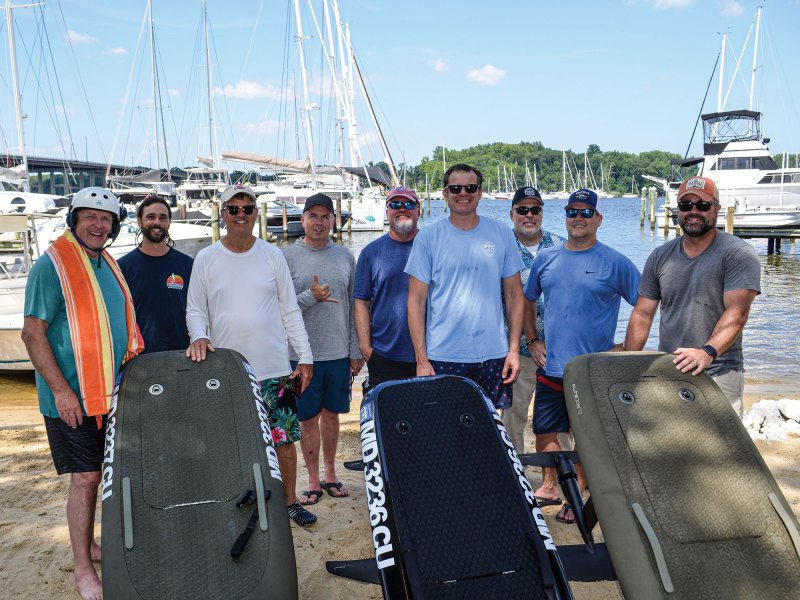
At the request of the USCG, ABYC met in January to discuss the need for safety standards for efoils and powered surfboards. They held an exploratory subcommittee on this during ABYC Standards Week, in Charleston, South Carolina.
The initiative aimed to address a gap where market innovation is outpacing federal regulations. In this meeting, the panel discussed specific technical areas to be considered including emergency cut-off mechanisms, capacity assessments, battery and electrical system safety, as well as requirements for on-product warnings and labeling.
“We brought together multiple stakeholders, including the Coast Guard, surveyors and efoil manufacturers, to discuss whether ABYC needs to develop a standard,” Goodwin said.
Once ABYC develops a standard, all manufacturers need to follow the guidelines to receive NMMA certification. The goal is to ensure that these stakeholders will collaborate to ensure any new standards are practical, widely adopted, and contribute directly to safer boating. ABYC and NMMA approval are marks of quality that savvy boat buyers look for when shopping.
The first step in the process is for the ABYC to develop a technical information report, which then leads to developing industry standards. That’s where ABYC stands right now with efoils. As Goodwin noted, “Standards follow new developments in technology, not the other way around.”
Needless to say, the idea is to keep everyone on the water safe, no matter what they’re using. “When someone gets hurt on the water, it’s not a good day,” Goodwin added.
Safe to say, ABYC and others are working hard behind the scenes to make sure that when you start running the waterways on your new foil, it’s built in a way to keep you as safe as possible. They’ve already done it with another technology that’s becoming more popular every day.
Jostick Engine Controls
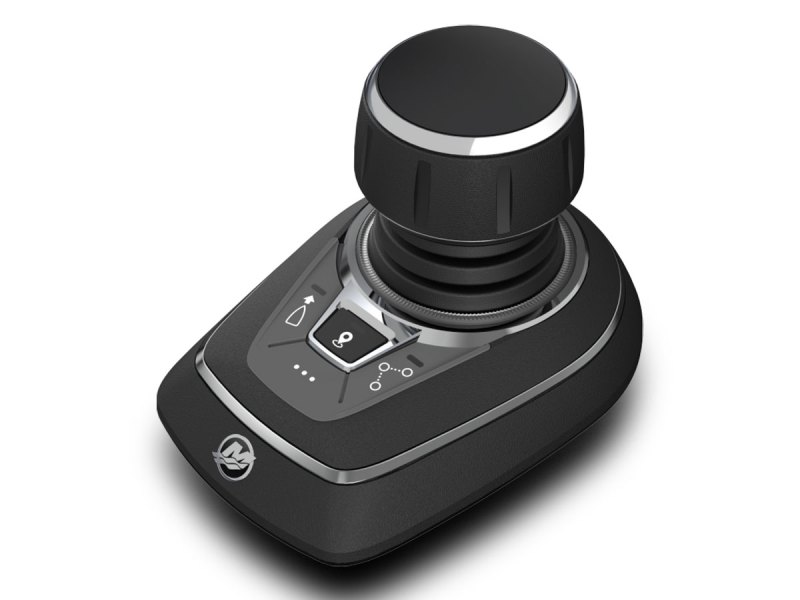
When joystick technology first hit the scene, it seemed to solve a lot of problems that everyday boaters find daunting: pulling up to a dock, handling in close quarters at low speeds, loading a boat on a trailer, or holding in one in place while waiting for a draw bridge, and more.
At first, joysticks showed up at the helms of only the biggest, most expensive yachts on the market as a luxury item. But now, manufacturers such as Volvo Penta, Mercury, Yamaha and others have developed joystick steering systems that work on small, single-engine boats. You’ll even see them listed as standard features on pontoon boats. Such a wide array of uses and applications requires new rules.
“Anything that relates to command and control of a vessel, we want to look at,” Goodwin said.
So now that they’re everywhere, how do builders ensure that when they install a joystick system on a boat, it works the way the person at the helm thinks it’s going to? The answer lies in the ABYC Standard P-28.
Developed in 2020, P-28 combined two steering and control standards that existed before joysticks became a thing. As ABYC reviews all of its standards every five years to make sure it’s keeping pace with technology, it adjusted P-28 again in 2025 to specifically update newer technologies related to wireless controls.
The P-28 standard defines a joystick as a user input device for the simultaneous control of thrust, steering, and propulsion. It outlines specific operational requirements for two distinct modes: cruising and maneuvering. For operation in cruising mode, the standard permits the engine’s throttle to remain engaged when the operator releases the joystick. However, when switched to maneuvering mode, the system must be fail-safe. Releasing the joystick in this mode is required to result in a disengaged transmission or a water jet bucket in the neutral position, and the engine must return to a manufacturer-determined idle state or, for electric motors, a stopped state.
P-28 also mandates that joystick controls be intuitive. The boat must move in the same direction that the control head is pushed. If the joystick includes a rotational function, twisting it clockwise must result in the craft rotating clockwise, and a counter-clockwise twist must produce a counter-clockwise rotation. This ensures a predictable response for the operator. The standard also addresses the growing use of dynamic positioning systems, which are often integrated with joysticks. These systems must be activated manually and can only engage if they can determine the boat’s position within manufacturer-set limits. Should the system lose its ability to determine or maintain its position, it must disengage and alert the operator both visually and audibly.
To ensure reliability, P-28 subjects joysticks to rigorous testing protocols. A durability test requires a sampled device to withstand 500,000 cycles at full stroke in each direction (X, Y, and Z) without any electrical or mechanical malfunction. Furthermore, an end-stop load test ensures the joystick’s physical robustness. It must be able to withstand a force of approximately 78.6 lb.-ft. when pushed to its limits in forward, back, and side-to-side directions, and a specified minimum torque when twisted.
Following these tests, the system must continue to operate within its original parameters without failure, cracks, or impaired function. These requirements are part of a broader set of standards within P-28 that cover everything from response times and system hardening to mitigating electrical interference, ensuring that the integration of joysticks into marine control systems enhances (or at least does not impair) safety and reliability on the water.
Lithium Batteries
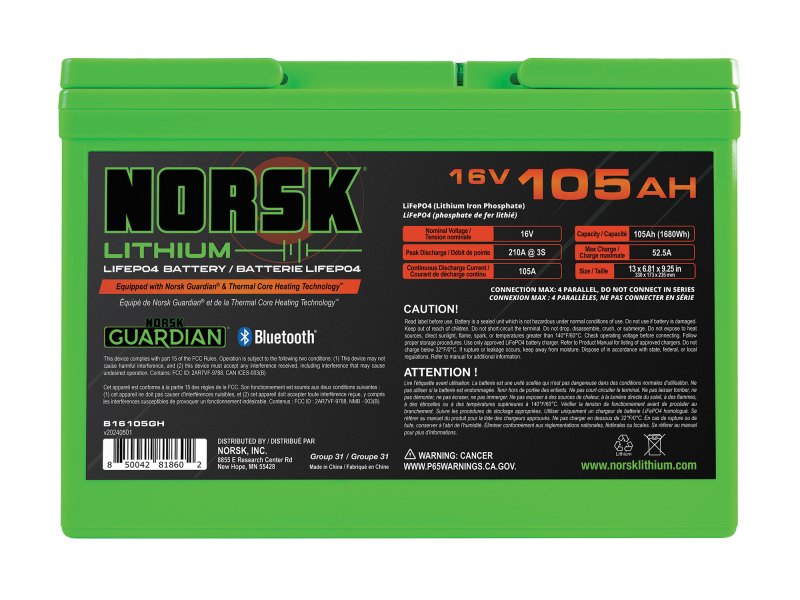
When boating-safety standards first came to pass, most boats used traditional lead-acid batteries. In the past few years, battery technology has been transformed. Today, you see a proliferation of lithium iron phosphate (LiFePO4) batteries, be it for engine-starting systems to house battery banks for electronics and trolling motors. LiFePO4 battery technology is now so advanced that it can even replace traditional onboard generators powered by fossil fuels, not to mention power an entire boat in terms of electric outboard and inboard motors.
Why is this happening? For one, lithium batteries are roughly half the weight of their lead-acid counterparts, which can improve a boat’s speed, efficiency, and acceleration. Boaters can also use nearly 100 percent of a lithium battery’s capacity compared to about 50 percent for lead-acid types, effectively doubling the usable power. LiFePO4 batteries charge up to five times faster and have a much longer lifespan—10 years or more with the proper maintenance routine.
With Brunswick’s Navico group developing technologies such as the Fathom e-power system, which can power everything onboard that a generator used to, and builders such as Scout and Regulator adopting lithium battery systems to supply onboard power, it’s a new world for Coast Guard regulators and ABYC.
“You get rid of a generator, but now you’re putting 48-volt high-output alternators on outboards and there’s a lot of energy transferring, and new safety issues that legislation never considered,” Goodwin pointed out.
Safety concerns include potential toxic gas release and “thermal runaway,” a known problem with lithium batteries where a chain reaction produces intense heat that can cause the batteries to fail, catch fire or even explode. The systems also create a weight difference compared to traditional batteries or generators that can alter a boat’s center of gravity or weight distribution based on the original design.
ABYC responded in 2022 with the E-13 Standard, developed specifically for lithium batteries, to ensure proper installation and safe usage on boats. The standard states that a battery management system (BMS) must be installed to automatically stop charging if the voltage or temperature falls outside of safe limits. It must have high- and low-voltage cutoffs, as well as high- and low-temperature cutoffs that work independently of the charging sources. It must also provide an audible or visual alert that the captain can see.
In addition, any lithium batteries installed on boats must be tested to standards such as UL 1973, UL 2580, or SAE J3053. They must be secured to withstand boat movement, and the installation must follow manufacturer guidelines for ventilation and location.
Automated Driving Systems
A few years ago, also at the Fort Lauderdale Boat Show, I stepped aboard a small boat for a demonstration by a company called Avikus, where it took us out of a slip using manual controls and then activated a system where, without any input from the helm, the boat automatically navigated a few hundred yards down a channel, turned around and docked itself—all without any assistance from the captain at the helm. This was my first experience with an Advanced Driver Assistance System (ADA). Since then, I’ve been on boats powered by systems from Brunswick, Volvo Penta and others that basically serve the same purpose, to different levels of automation.
These systems rely on a complex array of technology including cameras, GPS, lidar, sonar, and radar to create a digital representation of the boat’s environment. While it once seemed totally conceptual, you’re now seeing these systems more and more on recreational boats. For example, there’s the Avikus Neuboat system, which incorporates six cameras for a 360-degree view, as well as Raymarine’s DockSense that employs five machine-vision cameras that provide the user with three-dimensional depth perception.
Along with cameras, GPS and the like, these systems use proprietary software to identify objects like other vessels or buoys, calculate distances, and determine if a collision is imminent. They can then decide on a course of action, such as altering course to starboard to pass astern of another boat. The systems use this information to interface with the vessel’s electric steering, shift, and throttle controls, to make the boat move in a safe manner.
While these technologies are expensive, their intent is to reduce operator error, making boating safer in general. But, as they take control away from the captain at the helm, they present a whole new list of concerns for the USCG and ABYC.
Automated systems technically fall under ABYC Standard P-28, just like joysticks, but is this a case of the technology surpassing the existing safety standards?
“We’re in the process of producing a technical report on ADAs,” Goodwin said. “We want to make sure that as the technology advances and becomes more prevalent, we are maintaining the safe experience for boaters..”
Read Next: Custom Catamaran Pushes Boatbuilding Limits
Engine Weights
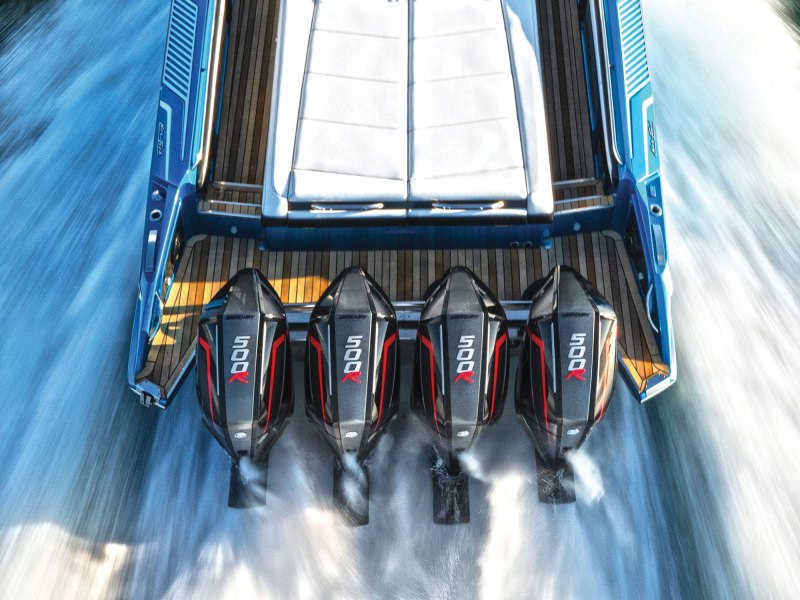
Perhaps no other development illustrates how the ABYC had to adjust its standards to new technology more than the transformation of the outboard engine. When the Federal Boat Safety act passed in 1971, all outboards were two-strokes, and none larger than 150 hp. With the transition from two-stroke to four-stroke engines, suddenly putting a pair of 200 hp outboards on the transom could mean an increase of up to 200 pounds of weight on the stern.
“We had to update our weight tables for building recommendations,” Goodwin said. “Especially for boats under 26 feet.”
Goodwin was referring to the Coast Guard’s establishment of a weight table in 1977, used by boatbuilders to determine the amount of flotation needed to rig the boat with certain outboard power. Updated again in 1984, the table didn’t take into account the sheer size and weight of the new-age four-strokes.
As boater testers, we noticed this in the field, where builders put heavier four-strokes on boats designed for older, lighter two-strokes. We started seeing through-hulls and scuppers meant for fast drainage now sitting below the waterline, no longer able to quickly clear water that came on deck.
ABYC responded in 2015 by updating S-30 (Outboard Engines and Related Equipment Weights ABYC S-30) to reflect the current state of marine outboard engine weights. The organization continues to update it to handle the increased size of engines, as we’ve seen outboards go from 200 to 400 to even 600 hp—with Mercury recently introducing a conceptual 808 hp Verado last January.
“Especially with boats under 26 feet, we’ve had to constantly update our standards so that the builders can match their flotation and their capacity plates with the bigger engines,” Goodwin said.
If the industry ever develops a 1,000 horsepower engine, rest assured that ABYC will be on top of it, making certain that if you have it on the transom of an ABYC-certified boat, the vessel won’t sink because of it.